


UP Alumni in Harvard
By Jaemark Tordecilla
In the late 19th century, a group of young men from the Philippines—the best and the brightest in the islands—were living in Spain for advanced studies. They were not Filipinos, at least not technically. At the time, the Philippines was still a colony of Spain, and there was a racial hierarchy that muddled their national identity.
At the top of that hierarchy were the peninsulares, Spaniards born in Spain. Then there were Filipinos, which is what they called people who had Spanish parents but were born in the Philippines. Then there were mestizos, of mixed Spanish and native races. Then came the natives, who were called indios, because the white people who conquered the Southeast Asian archipelago called brown people everywhere Indians, no matter where they were in the world.
These bright young indios, fourth class citizens even in their native land, wanted to push for change while living in Spain. So what did they do?
They started a newspaper.
One of the first things they teach us in history class is the importance of La Solidaridad, the newspaper started by the reform movement in Spain that eventually inspired indios to rise up in revolt.
I thought about this story while I was gearing up for my fellowship year at the Nieman Foundation for Journalism, and figured it was a fun story to share with everyone at the premiere institution for journalism at Harvard University: imagine coming from a country whose founding fathers are journalists.
But while I was looking for materials using Harvard’s online library, I came across research that showed that the story wasn’t quite right. A Spanish researcher, Gloria Cano, did extensive work studying the press during that period, and in her work, she argued that the importance ascribed to La Solidaridad in Philippine history was overblown. The culprit, according to Cano: the Americans who took over from Spain, who wanted to push the narrative that they were better colonial masters because unlike the Spanish, they didn’t suppress a free press.
In fact, what Gloria Cano found was that there was already a vibrant newspaper industry in the Philippines by the late 19th century. There were more than 100 newspapers and magazines ranging from liberal to conservative, with different languages, covering news but also arts and youth culture. There was even a publication, El Hogar, written exclusively by women that aimed for a female readership.
“By 1896 the Filipino people had reached an astounding level of political know-how, mentioned by the American Government when it decided to occupy the Archipelago,” Cano wrote in her research. For this, she credited the work of national heroes like Jose Rizal, who wrote novels as well as articles in La Solidaridad, but also on democratic journalism. I found it inspiring how, even before our country was a country, our people have been looking to journalists to shine a light on issues, to help them understand the world.
—
I became a journalist in 2009 for one reason: I wanted to focus my work in a field that promoted social justice. Prior to that, I was working in technology, a much more lucrative field, having graduated from Philippine Science High School before earning a Bachelor of Science degree from University of the Philippines Los Banos and a Master of Technology Management degree from U.P. Diliman. But perhaps because of all the years I spent at U.P., there was constantly a voice at the back of my head chirping: “Serve the people.”
It was an inauspicious time to join the industry. The Committee to Protect Journalists had just named the Philippines among the worst places in the world to be a journalist, primarily due to the culture of impunity prevalent given the unsolved murders of journalists speaking truth to power. Later that year, the Maguindanao Massacre happened, claiming the lives of 58 people, including 33 media workers, in what remains one of the deadliest events for the press in history. It was perpetrated by the Ampatuan clan, the most powerful political family in the region.
I was in the middle of it while beginning my career for the Philippine Center for Investigative Journalism (PCIJ), for which I covered the aftermath of the massacre. My stint at the PCIJ took me around the country giving me a first-person view of the issues faced by news outlets across the country. Aside from the threat of violence, there were also continuing challenges such as political intimidation and legal harassment from entities seeking to influence coverage or silence critical reporting. There was also constant economic pressure as traditional revenue streams continued to decline, leaving many journalists especially in the countryside vulnerable to the temptations of corrupt practices.
Things have only gotten worse in the years since. The government continued to target and harass journalists. Rappler, founded by Nobel Peace laureate Maria Ressa, was the target of lawfare during the Duterte administration. In 2020, the country’s biggest media company ABS-CBN saw its broadcast license canceled by lawmakers loyal to the president, who had declared the television network an enemy. The threats aren’t always political. In January, CNN Philippines announced its closure after nine years following billions of pesos in mounting losses.
Many news organizations have struggled to adapt to digital models, facing competition from free online content and the dominance of tech giants in digital advertising. Furthermore, online spaces became an information wasteland for audiences, with Facebook’s former policy director for global elections once describing the Philippines as “Patient Zero” in the global disinformation crisis.
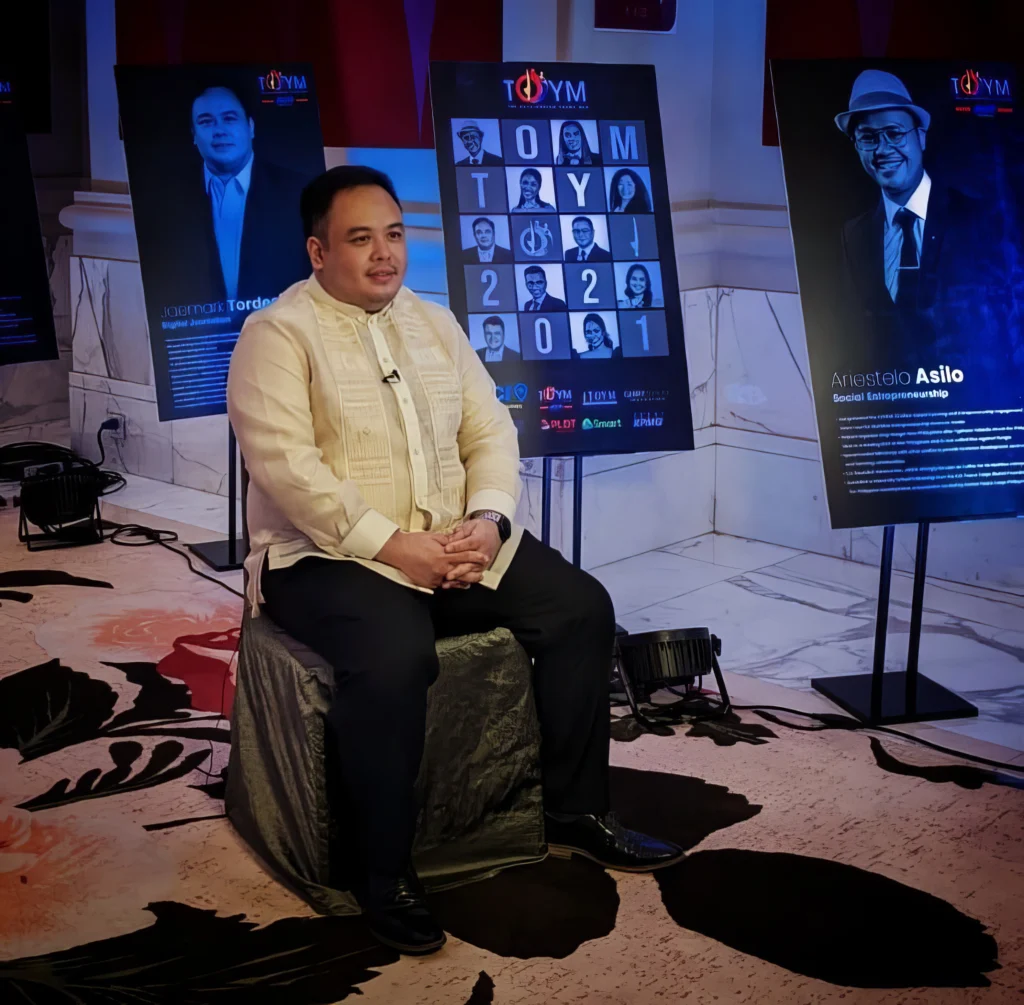
Meanwhile, since my PCIJ days, I had been hired for leadership positions at more mainstream news organizations. In 2014, I became editor-in-chief of GMA News Online. With my background in technology, I spent nearly a decade creating strategies and new journalism platforms that allowed my team to tell stories better and reach new audiences, usually on the latest emerging platforms. We did a lot of longform reporting and digital documentaries, but we also used graphics and animations to tell stories of various lengths. We used gimmicks like augmented-reality filters, Tiktok duets, and online games, and we’ve collaborated with influencers. We were even the first media outlet in the world to air our evening news live on Tiktok. We were on the leading edge of social media, with our work recognized witha gold medal for journalism innovation by the World Association of News Publishers. I even won the prestigious TOYM Award for 2021 for my work in Digital Journalism.
Ours became the most trusted news brand in the Philippines, according to the Digital News Report by the Reuters Institute. In 2022, the brand had a trust score of 70% according to the study, even as “Trust in news overall” languished at 37% among Filipino respondents. The study also showed we had the most reach for both offline and online. This tracked with our consumption data. GMA News was among the top in the world, often reaching new peaks during moments when Filipinos were most in need of news: lockdown announcements, COVID-19 surges, and elections.
Our analytics told a clear story: Filipinos in the country and abroad were hungry to find sources they could trust. But in a world of endless content, attention is the most important currency, and news organizations are no longer entitled to anything. We all need to fight for that attention every day.
Some days, we win. Any other news organization in the world would be glad to take our numbers. Some days, we lose. A University of the Philippines study found that because of intense misinformation operations during these past elections, the reach of news outlets for political discourse is “increasingly limited to news-reading publics,” with our gatekeeping function bypassed by politicians and new political actors. Much of our political reporting was not reaching these partisan communities.
Indeed, in the 2022 Philippine national elections, Ferdinand “Bongbong” Marcos, Jr., the son and namesake of the late dictator, won the presidency in a landslide without taking a single critical question from the biggest news organization in the Philippines.
—
Despite this, mainstream newsrooms in Manila remain in a relatively privileged position. Many journalists working for alternative news organizations, usually in the countryside, often face more immediate and existential threats. Journalists like Frenchie Mae Cumpio, a regional journalist who has been accused by the government of being a rebel operative. She has been in jail over trumped up firearms charges. Another journalist, Lady Ann Salem, spent a year in jail. After her release, authorities went up to the appeals court to try and overturn her acquittal.
Then there’s Juan Jumalon, a.k.a. DJ Johnny Walker, a radio broadcaster who was shot dead live in his broadcast. The Philippines has been in the Impunity Index of the Committee to Protect Journalists every year since 2008. We continue to be one of the worst places in the world to be a journalist. The fight is exhausting, and it’s easy to feel helpless. But it’s necessary.
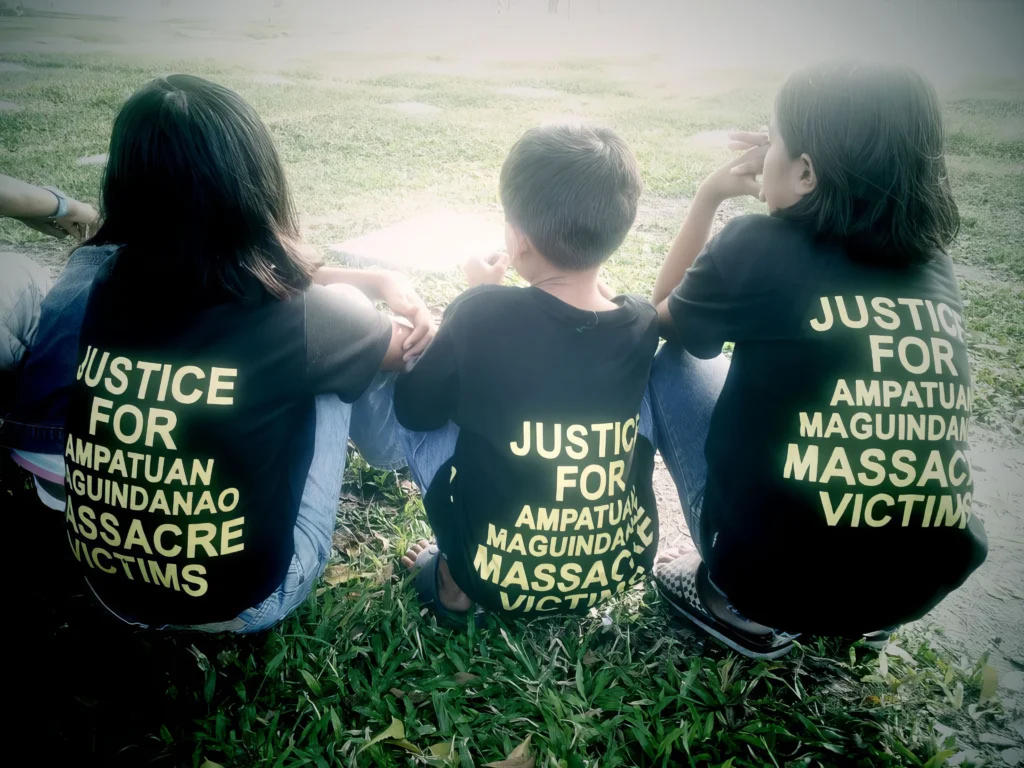
I recently reached out to Nenen Momay-Castillo, a Filipino nurse who I met while covering the aftermath of the Maguindanao massacre. Her father Reynaldo “Bebot” Momay, a photojournalist, was among those murdered. But his body was never found, so for a while, Castillo couldn’t even file a case against the murderers.
Despite that, she took a leadership role organizing the families. She was always quick to make things light, always ready with a joke and a smile. She told me she does it because otherwise, she’d just be crying all the time.
The courts found the Ampatuans and their men guilty in 2019, but they were acquitted in the Momay case, because they ruled that his body was never proven to be there—all they found were his dentures.
Castillo has left the Philippines to work in the United States as a nurse, but she’s still seeking justice. I reached out to her before Thanksgiving last year; I almost didn’t realize that it was the anniversary of the massacre. She was glad to hear from me. I asked her about her kids, who I had interviewed before, and she sent me a picture of their happy family.
She told me she can’t thank us enough for the work we did as she sought justice for her father. And I was thinking, I wasn’t able to do anything.
But God bless her for believing that our work makes an impact, because if she believes it, then how could I possibly not?