RITES OF PASSAGE: The Four Sculptures
By Rene Estremera, Xer Jason Ocampo & Angela Sucaldito
To former University of the Philippines Mindanao Chancellor Ricardo de Ungria, the journey into the College of Mathematics (CSM) is a rite of passage. When entering the CSM on the Kanluran side by foot, the first thing one sees are the four prominent landmarks of UP Mindanao. These are four massive sculptures, ranging from three to five meters in height. These sculptures, inspired by mythology, have created an inspiring atmosphere for generations of CSM students.
Mindanawon artist Rey Mujahid ‘Kublai’ Millan created the sculptures in 2003. An alumnus of UP Diliman College of Fine Arts in 1995, Millan dedicated the sculptures to his mother, Maximiana “Min” Ponce-Millan, who is also an alumna of UP Manila. As inspirations go, the project began as an inspired creation that required a suitable outdoor location.
UP alumnus Tita Lacambra Ayala, who is the mother of musician Joey Ayala, reached out to then-UPMin Chancellor Ricardo de Ungria. The rest, as they say, is history.
The chancellor offered Millan a campus site for the sculpture. After finding the CSM site ideal, Millan proceeded with the project. He worked on the masonry himself and bent the steel bars by hand. He said the project had caused him back pain, which he admitted to experiencing up to the present.
Despite the challenges, the sculptures have become iconic artworks that hold great meaning for students and constituents.
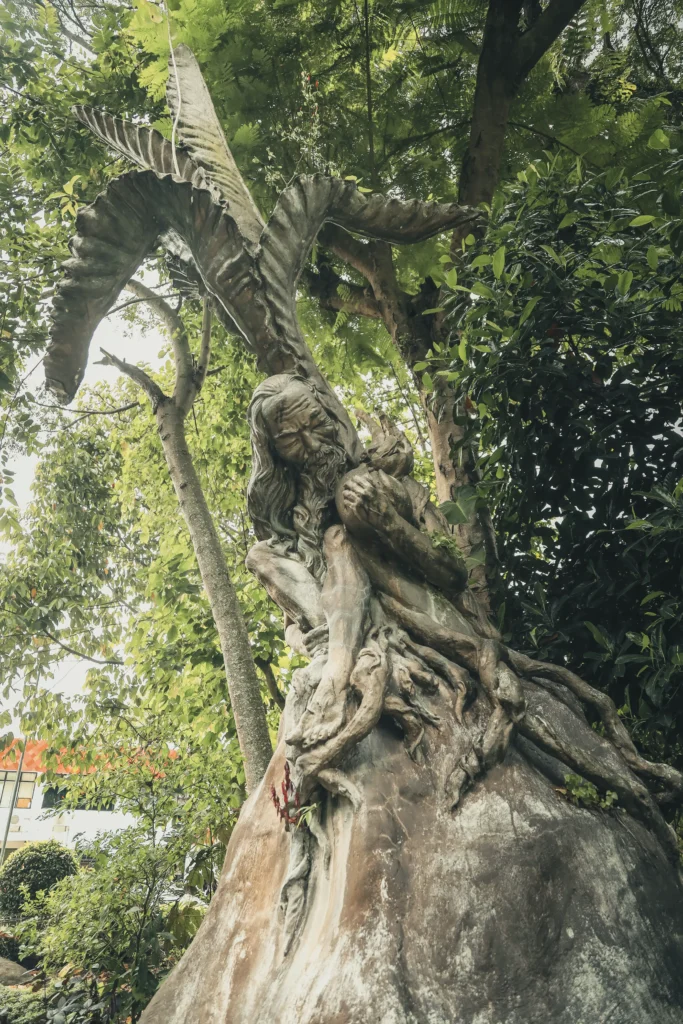
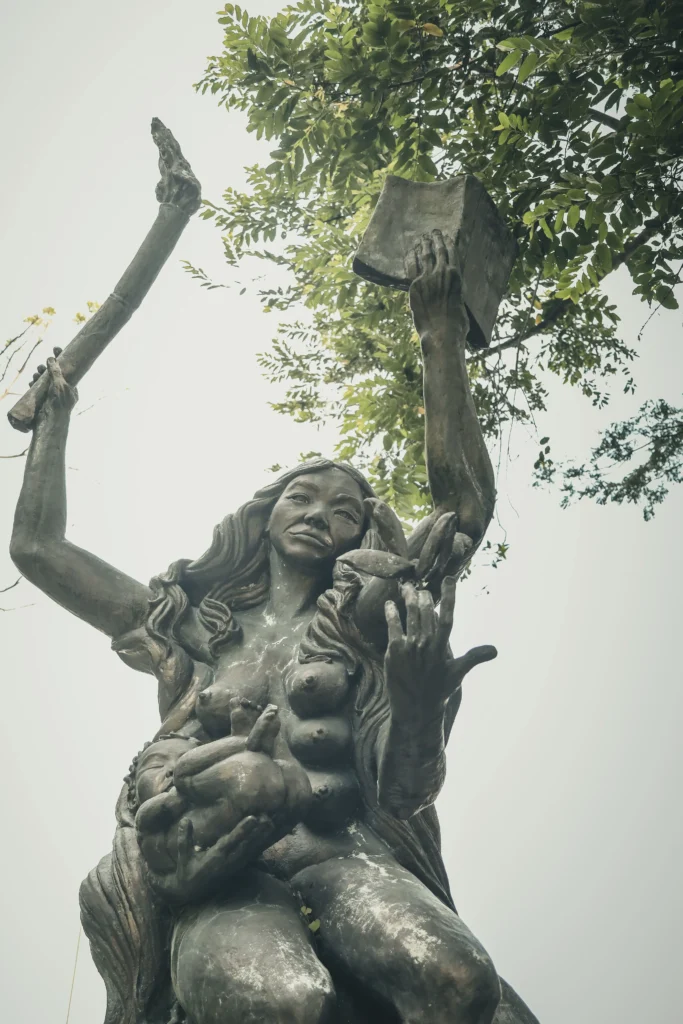
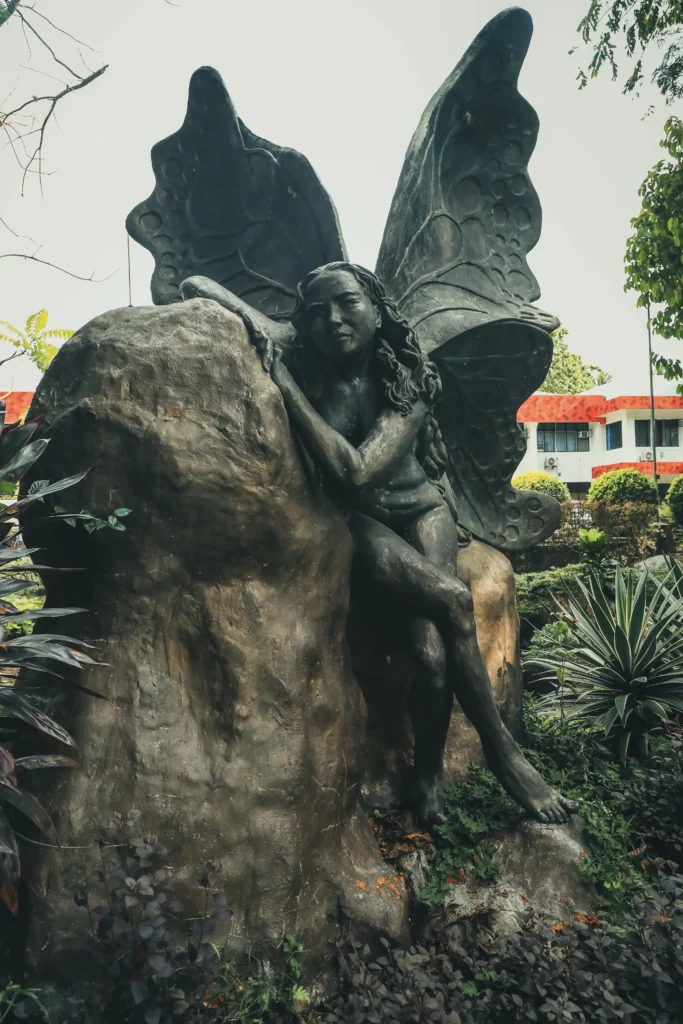
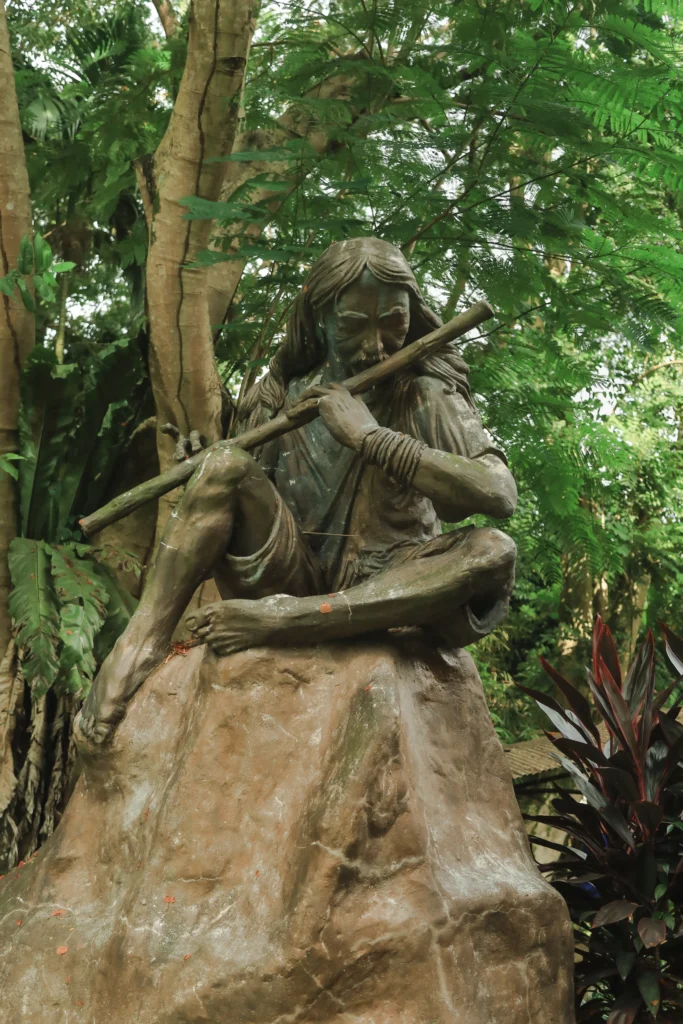
The four sculptures represent the physical, fantastical, ideal, and transcendent realms. The Flutist represents the physical world, the Butterfly represents the imaginary world, the Seed represents the transcendent world, and the Goddess represents the ideal world.
According to Millan, the Flutist is a self-portrait of the artist. It is a gift from the Talaandig tribe for his services during a painting workshop.
“The only gift I can give is art. For them to appreciate the joy of painting and creating,” he said.
The Butterfly represents the imaginary world, where one can tap into their fullest potential by allowing creativity and imagination to flow.
The Seed sculpture expresses the cycle of human transcendence, as one grows towards the heavens while remaining grounded in the earth.
The Goddess is depicted as a figure cradling an infant and a butterfly, while holding a torch and a book. This symbolizes the journey of a human being towards becoming a total person. It is the most popular sculpture because it represents Mebuyan from the Bagobo mythology. Mebuyan is a goddess portrayed as a pregnant woman with breasts, who nurses infants in the underworld. And, like Mebuyan, UP Mindanao nurtures its students until they are ready to enter the real world.
Millan also associates the Goddess with the UP Oblation.
“The Oblation is an ideal when you give yourself totally,” he said. True enough, Millan’s labors have shown his own sacrifice, as he continues to bear the burdens of the project to this day.
The sculptures, according to the former chancellor, Ricardo de Ungria, represents elemental and spiritual energies of the air, earth, and nature. They are well-suited to the foliage that surrounds them, as well as the biology and food technology programs behind it.
The Flutist, in his opinion, reiterates the concept that music is the structure of the universe. The Butterfly, often seen as an angel, symbolizes the creative spirit. The Seed, with its banana leaf, symbolizes the mystical powers of nature. The Goddess is a symbol of fertility and creativity that has been passed down through generations.
The former chancellor considers the sculptures, which are positioned by a creek and between two footbridges leading to campus, to serve as a rite of passage rather than just physical artworks. He relates this to the fact that, as far as he is aware, there have been no bad incidents in the area.
In addition, he believes that the sculptures capture the spirit of the place.
“Mindanao is a challenging place. Everywhere you go, you need to say, ‘Tabi, po.’ The sculptures represent a kind of ‘Mano, po!’ on behalf of the entire campus,” he said.
But regardless of the interpretation of the four statues, Millan is confident about the value of his services to students and others.
“This is the little way I could give back,” he said.
He stated that the artworks are for everyone. To allow people to ponder on the concept of joy in all their worlds of being. For younger students, the artist presents the artwork as a challenge.