


UP’s CHAMPIONS OF INDIGENOUS TEXTILES
By Maita Domaoal

According to recent news reports, fake Cordillera blankets and garments have found their way to Baguio markets. These machine-made counterfeits were being sold cheaply, further driving business down for the already beleaguered local weavers. It is only the latest in a number of troubles confronting indigenous Filipino textiles.
Help is on the way though. From government initiatives and legislative action to scientific research and creative movement, there are University of the Philippines alumni taking up the cudgels for the preservation, revitalization and protection of indigenous fabrics.
For one, Deputy Speaker Loren Legarda has called for an investigation of the proliferation of these knock-offs, saying that, “Such influx of counterfeit goods poses a risk to rural livelihoods of indigenous cultural communities in terms of market competition and is also to the detriment of sustaining their culture and creative productivity.”
The lone representative of Antique province has been a longtime advocate of the preservation of indigenous arts and culture. As senator, she authored the Philippine Tropical Fabric (PTF) Law which prescribes the use of Philippine tropical fabrics for official uniforms of government officials and employees and requires the use of these fabrics in government offices and functions. It has proven to be a good start for people to better appreciate homegrown fashion and fabrics.
More recently, she hosted an online discussion with experts on “Weaving Resilience: Reviving Indigenous Textiles and Crafts.” The episode dealt with the impact of the pandemic on the weaving and crafts industry and how its resilience could be enhanced.
Legarda appealed for help for these micro enterprises in weaving and other crafts across different provinces. With the pandemic on, there’s no better time than now to support these artistic traditions.
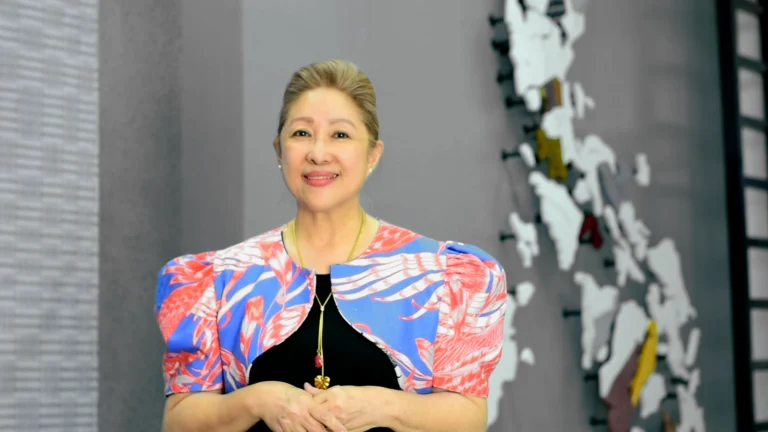
Aside from the PTF Law, there’s the observance of PTF Month every January, a celebration of natural textile fibers produced, spun, woven or knitted and finished in the Philippines. Spearheading this is the Department of Science and Technology-Philippine Textile Research Institute headed by Director Celia B. Elumba.
The institute has been at the forefront of reinvigorating Philippine textiles through science, technology and innovation, promoting sustainability and pushing for its global competitiveness. PTRI takes the lead in research and development on textiles for garments, shoes, bags, upholstery, linens, and even face masks and personal protective equipment.
Their flagship program, Textiles Empowering Lives Anew (TELA), includes aiding weaving communities across the country. This means providing upgraded therapeutic handlooms, which the director noted, was not so simply done. Weavers, particularly those in the north, have a long and warm relationship with their looms. Many had been handed down through generations. But these newer looms are functional even for the differently abled, and help increase production and livelihood.
Following the PTF Law, the agency also sought to encourage the use of Philippine fabrics in government office uniforms by having fashion designers take a shot. Renowned Filipino designers drew lots to create two everyday looks and one gala outfit for employees of the Departments of Science and Technology (DOST), Foreign Affairs (DFA), Tourism (DOT), and Trade and Industry (DTI), the National Economic and Development Authority (NEDA) and the Civil Service Commission.
Elumba explained that prototypes had to be made with tropical fabrics like piña, abaca, banana or silk. A light mix of polyester was allowed to prevent wrinkles.
Now who wouldn’t want to go to work in a Rajo Laurel design? The succeeding showcase was a much-lauded event for government and fashionistas. It’s all part of PTRI’s mission to highlight the Filipino heritage, especially in everyday wear.
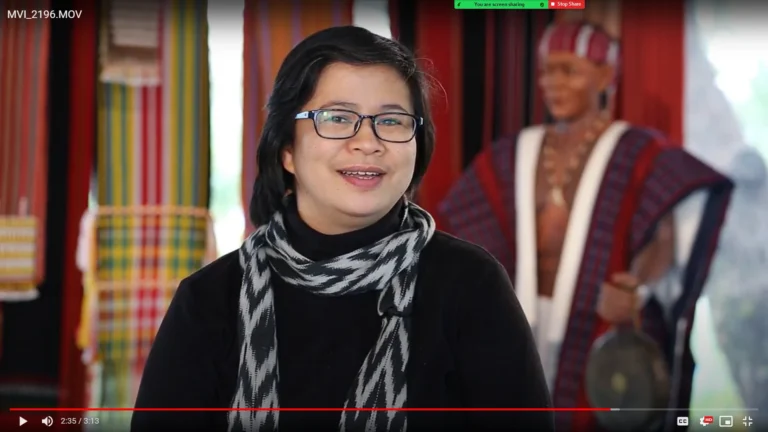
Over in UP Baguio, Prof. Analyn Salvador-Amores, Ph.D takes a multi-disciplinary approach to preserving the distinct woven textiles of the Cordillera region. Each of the different indigenous communities in the region has particular weaving techniques. This results in forms and patterns unique in artistic design, meanings and origins. Unfortunately, few weavers remain and fewer still are those willing to learn the art. Weaving is a dying tradition in the region, but the Cordillera Textile Research Project (CordiTex) aims to preserve and document all it can.
Dr. Analyn Salvador-Amores serves as project leader for CordiTex, and is concurrently director of Museo Kordilyera, the first Ethnographic Museum in Northern Luzon. In 2015, she was awarded Metrobank Foundation Outstanding Teacher of Higher Education.
Dr. Salvador-Amores’ work goes beyond creating a database of age-old weaving designs, however. CordiTex focuses on the anthropology, history, mathematical symmetry, technology, art, ergonomics, and science of Cordillera textiles.
She explains: “CordiTex facilitates the reconstruction of vintage textiles through digital loom technology to rejuvenate interest in traditional weaving in the region. It collaborates with local weavers to preserve traditional weaving and revive traditional textiles through the use of digital loom weaving, popularized instructional materials on weaving, and weaving workshops; and disseminates the findings of the research through themed exhibitions, seminars, and publications.”
The project won’t replace handlooms but will use digital loom technology to reconstruct and transfer the data into a written form that weavers can try on their traditional looms. CordiTex works for regional weaving traditions to move forward despite the challenges.
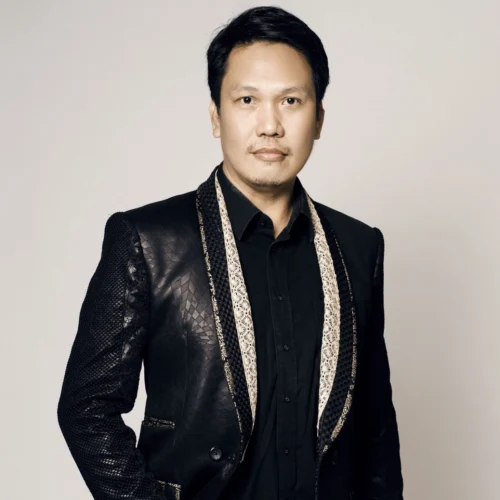
For creatives like Concon Siñel, looking at the creation process of Filipino weavers became the inspiration for one of his largest projects, as well as his personal fashion. Siñel once observed T’boli weavers and realized that it was more a spiritual undertaking rather than a honed skill.
A veteran events developer and director, Siñel built his name on provincial and national pageants and fashion shows. He frequently collaborates with fashion icon Renee Salud, a strong advocate of Philippine fabrics. Together, they would bring the globetrotting Philippine Tapestry fashion show to hundreds of Filipinos
and international admirers.
“My constant inspiration has always been the promotion of what is unique about the Philippines. This permeates in everything I do in events and shows. In fashion shows, textile promotion is a no-brainer. With this mindset, it came naturally that I would be paying homage to unique and indigenous fabrics endemic from the north to the south of the country,” he said.
In 2017, they were invited to hold a fashion show in Davao City prior to the Miss Universe competition in Manila. International candidates showcased creations by Salud and top Mindanao designers using weaves like t’nalak, inuol, pis syabit and Mindanao silk. The show was well received by audiences and organizers. Would they consider bringing the show to ITB Berlin, the world’s largest tourism trade fair? Philippine Tapestry was off and running.
The show became a huge hit, promoting Philippine textiles as well as the destinations where the fabrics originated. Philippine Tapestry returned to ITB Berlin the next year, and also did two tours of the annual World Travel Market in London, and the Arabian Travel Mart in Dubai. It also kicked off a North American tour for large Filipino communities in Vancouver, Calgary, Toronto, Montreal, Philadelphia and Las Vegas plus two stints in New York.
“My dream is for Philippine Tapestry to grow into an event shown in all cities where there is a Filipino community,” Siñel said. “The goal is to cement the presence of Filipino culture, through textiles, in these places. Judging from the reaction of Filipinos wherever we went, things are off to a perfect start. The ultimate goal is to bring Philippine fashion to the world stage –- to a level that that there’s a global demand for these textiles, and this will create more jobs for the people.”