

Alumnus Tribute
UPOU’s Felix Librero: The man who fostered openness in education
By Patricia Ruth Cailao
The transition to online learning has posed serious challenges in the academe since the Covid pandemic. It has been difficult both for educators and students to meet the technological demands of shifting online, especially with the expensive cost it entailed. But close to two years into the pandemic,
universities across the country, including the University of the Philippines, have managed to survive and thrive.
Despite the hardships faced by the education sector, it’s still important to look back and remember our own university alumni who planted the seeds of e-learning, making education more accessible and future-ready. One man that stands out is the former chancellor of the UP Open University, Professor Emeritus Felix Librero.
Fondly called “Sir Lex” in the UP community, Librero was born on May 30, 1943 and grew up in Itbayat, Batanes. He entered the UP College of Agriculture in Los Baños, Laguna, which was just a constituent university back then. He majored in Agricultural Communications and, after graduation, began his university career as a DZLB station supervisor. He started as an instructor and eventually rose through the ranks as full-time professor.
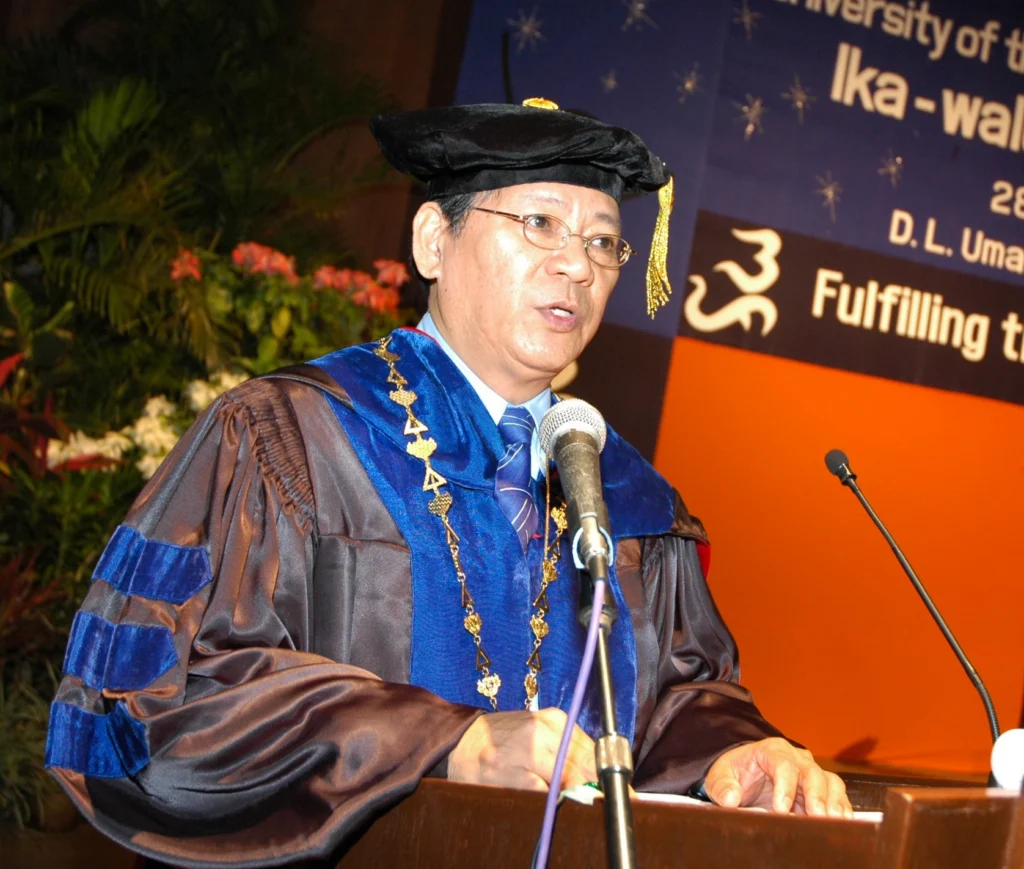
He earned a Master of Science in Development Communication and finished his Doctor of Philosophy degree in Instructional Systems Technology from Indiana University in the United States. He also held administrative positions in UPLB — as department chair of Development Communication and later on as its director when it became an institute. He was associate dean of the College of Agriculture, and became dean of the UP Open University’s School for Distance Education. He was vice chancellor for research and development, and served two consecutive terms as chancellor of UPOU.
During UP’s centennial year in 2008, Librero was selected as a member of the Board of Regents, the university’s highest governing body, as faculty regent, and continued to teach as Professor 12 even while at the compulsory retirement age of 65.
It was at the UPOU where Librero inspired developments for the university to have online platforms and make learning more accessible to education seekers who are not necessarily enrolled in UP campuses.
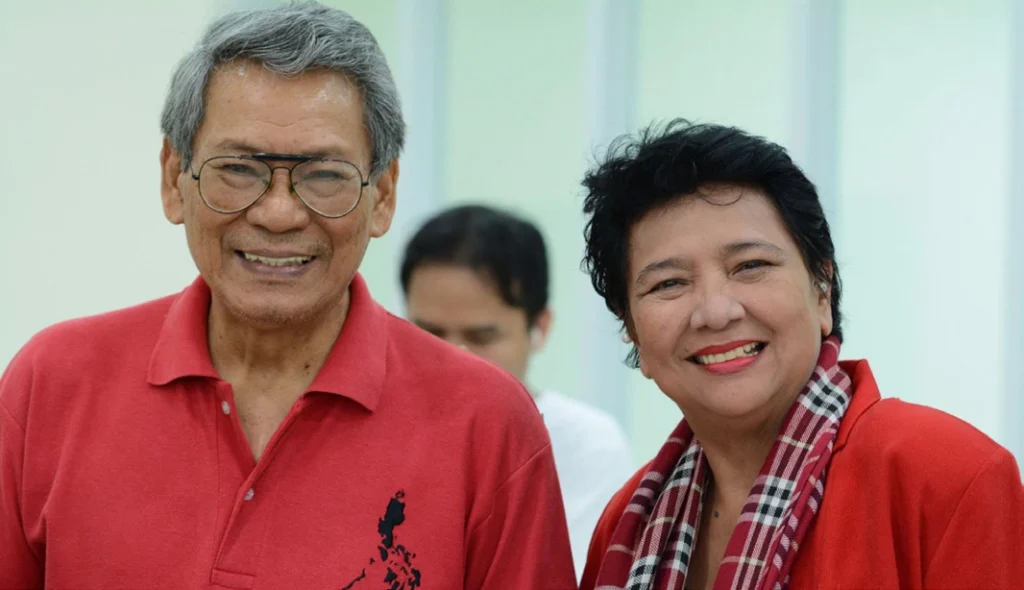
“Are we really tapping into the philosophy of openness?” This was the question posed by Librero to his colleagues and fellow administrators at the UPOU. Among them were Professor Emeritus and former UPOU chancellor Dr. Grace Javier Alfonso, who remembers Librero’s revolutionary academic leadership, anchored on that philosophy.
“As a friend, he was such a warm person; he had a lot of sense of humor. But I really admire this man because of his gentleness. And he also had this kind of calm personality. He had a very strong sense of responsibility when he was in the office. He treasured the responsibility and took note of the accountability that he had,” said Alfonso.
Librero carried the philosophy of openness throughout his leadership and this can be seen from UPOU’s oblation designed by Alfonso who is also an artist. Unveiled in 2005, UPOU’s version of oblation was a bit different from the usual statue of a man standing with open arms. This version was complemented with a whirling ornament as backdrop to signify openness as the bedrock of UPOU’s academic approach.
“I wanted an oblation of what UPOU was all about — borderless,” she said. “That’s the reason for the UPOU oblation’s design.” It was during Librero’s time that the icon symbolized the search also for the identity of a young university, she added.
According to Alfonso, the use of the internet in university transactions was still in the process of maturing at that time. And although print was the dominant modality, Librero started working on building the foundation of digitization within the university.
She said that during Librero’s time, things were not completely online, just technology enhanced, meaning technology was already in student support — the students could enrol and pay tuition online. It was also during Librero’s time that the multimedia center was put up.
‘We worked on it for years… By 2007, we were ready to go completely online. We grew through the internet. We were able to learn what we call the possibilities or the affordancesof technology-mediated and technology-enhanced teaching and learning,” she said.
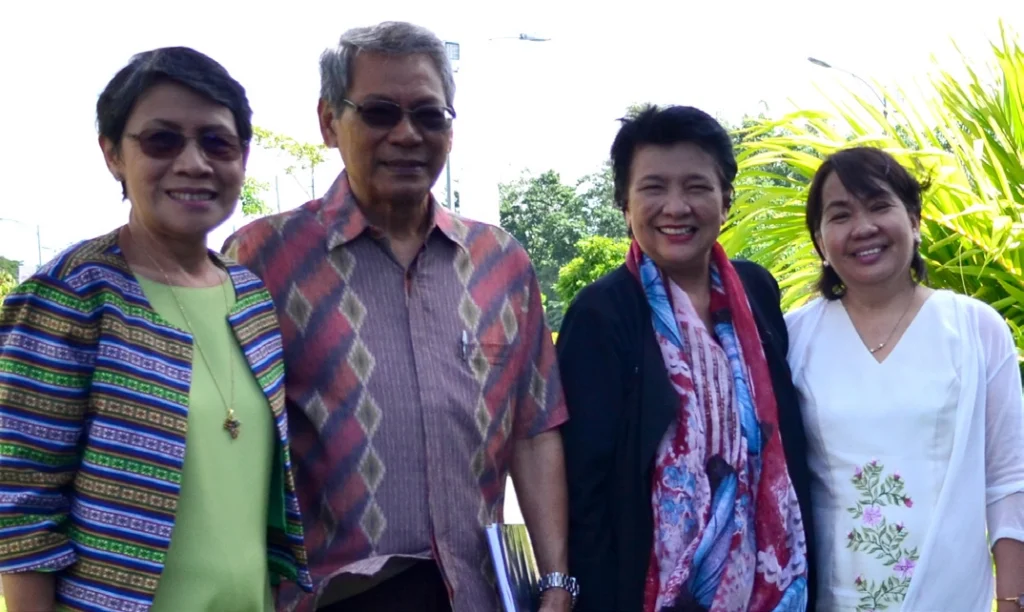
Alfonso also recalled that before the shift to digital, learning and testing centers for UPOU were held in various locations — even in embassies. The UPOU had 26 learning centers both within and outside the country.
“Today, everything is online. That’s how inspiring Lex was. He inspired me into thinking of the future, ten steps ahead. That’s how he affected everyone. So thanks to Lex Librero,” she said.
Librero also pushed for developments in teaching communication as an important discipline. The establishment of a Faculty of Information and Communication Studies in UPOU, paved the way for the convergence of information technology (IT) and other technological advancements in teaching communication, development communication, and mass communication.
Other initiatives inspired by his philosophy allowed the emergence of TVUP, wherein talks, interviews with UP professors, and dialogues dealing with the various disciplines taught in UP were streamed via Youtube. Alfonso said that TVUP has been helpful for students, especially in terms of research because the platform also served as an archive and a repository of open educational resources.
Librero also had his own web series called “FICS Chat with Sir Lex” wherein he taught students various communication and media research techniques, including writing theses.
Moreover, because of advanced digital approaches implemented by Librero, the UPOU and its leaders continue to actively participate in and be recognized by the Asian Association of Open Universities, an international organization that promotes services and contributions to open and distance education.
With the foundation laid by Librero, UPOU was well-prepared to face the new normal of online teaching and learning amid the pandemic, she added.
“We can share all over the world and all over the country. So it carries the same philosophy of UPOU, inspired by collaboration and networking open educational resources; everything to share for free. Because knowledge should be free. And I was so happy that Lex pushed for this openness and did not hinder this to develop,” Alfonso stressed.
Felix Librero died on March 16, 2021. He was 77. He is survived by his sister Juanita, wife Jeanette, son Al, daughter-in-law Vanessa, and grandson Aiden.
His lectures and other teaching resources can be accessed via https://networks.upou.edu.ph/?s=felix+librero