


Hindsight
The Birth of the UP System
By Michelle Avelino
The University of the Philippines (UP) is the country’s National University with the primary role of setting academic standards for higher education institutions and galvanizing national development through modern instruction, cutting-edge research, and socially-relevant extension work. It has served as the bastion for academic freedom and transformational activism throughout its history. This legacy lives on through the eight constituent universities (CUs) of the UP System – UP Diliman in Quezon City, UP Los Baños in Laguna, UP Manila, UP Visayas in Iloilo, UP Mindanao in Davao, UP Baguio in Baguio City, UP Cebu in Cebu City, and UP Open University in Laguna. Each CU prides itself on its expertise in delivering specialized degree programs in selected academic fields. UP Manila, for instance, is recognized for its health sciences programs, while UP Los Baños hosts highly acclaimed programs in agricultural development.
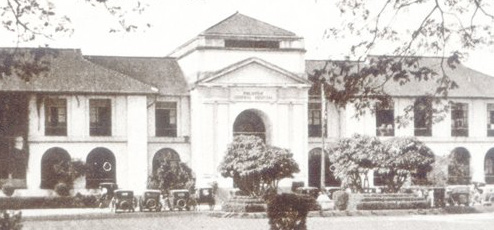
But the UP System was not always a multicampus body. It was established as a singular institution in 1908 through Act No. 1870 of the Philippine Assembly by the recommendation of then Secretary of Public Instruction William Morgan Schuster to the Philippine Commission under the American regime. UP was instituted
in general as part of the broader effort to build the educational system of the Philippines and, in particular, to address the requirement for professional instruction in the fields of medicine, law, engineering, and applied sciences.
In 1972, sixty-four years after its foundation – UP was reorganized into the UP System, which consists of autonomous CUs that were granted independence in three respects: in their curriculum development, fiscal autonomy, and administrative autonomy. The movement to push for the autonomy of academic and administrative units under UP was prompted by several historical factors. First of which is the class boycott held by the UP College Los Baños (UPCLB) community in February of 1969. This transitioned into the 70’s when democratization in the university’s decision-making processes was exhibiting an upward trend.
The impetus to make UPs programs accessible to students in all regions was also mainstreamed during this time. Finally, the discourse on the relevance of participating in national life and vis-à-vis the individual’s attainment of university education also gained traction. Internal to UP, the specific event that occasioned the creation of the UP System was the filing of a position paper on the restructuring of the UP College of Agriculture in 1970. This proposal for restructuring was interpreted essentially as a claim for independence from UP by the UPCLB.
Former UP President Salvador L. Lopez was against this move. He viewed that this would threaten to degrade the standards of UPCLB academic programs. Counter to this, advocates from the UPCLB argued that their programs should not be compared to liberal arts programs of other institutions of higher learning because their programs are science-based, technology driven and development-oriented.
Further to this, they asserted that their academic programs should be assessed against the standards of higher education institutions with similar focus. It was also the case, according to the same UPCLB advocates, that the recognition their programs earned from the international community of scholars was owed primarily to the strong leadership of its faculty in research and development and the expertise demonstrated by their alumni in the agriculture sector.
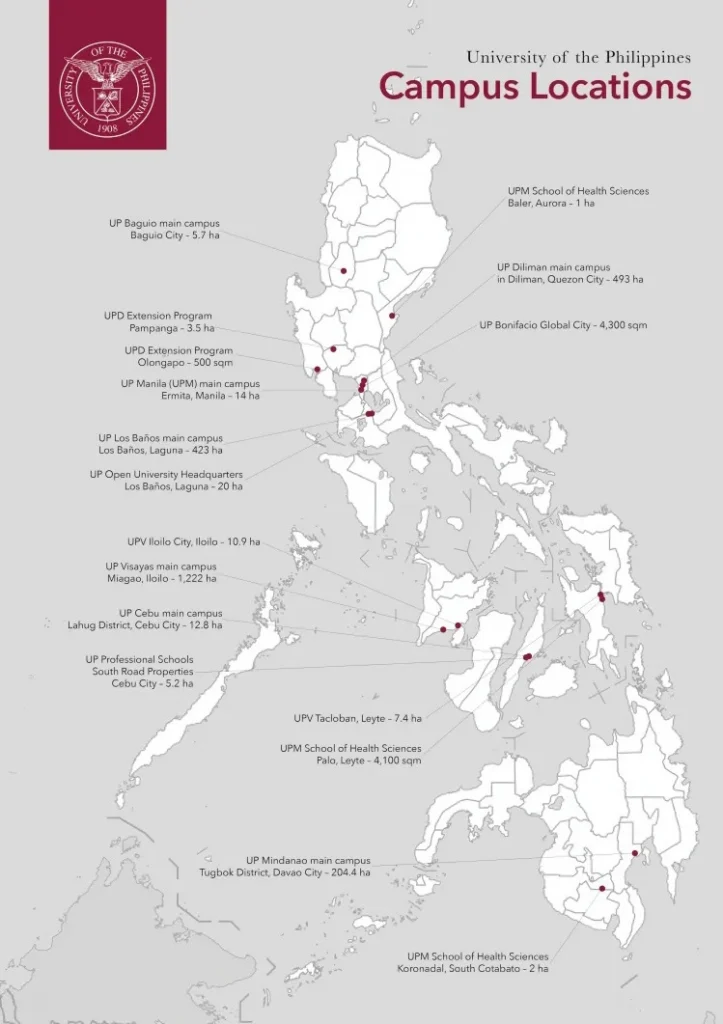
To resolve the impasse, President Lopez proposed to reorganize the university into the UP System which would be comprised of several autonomous universities. This was unanimously adopted by the Board of Regents (BOR) in October 1972. This effectively approved the establishment of an autonomous UP Los Baños under the umbrella of the newly instituted UP System. The rationale proffered for the creation of this separate CU is for closer coordination between the academic and research activities of the UP Los Baños with the view to contribute to the acceleration of the development of the agriculture sector nationwide.
UP Los Baños was also able to comply with the requirement set forth by the BOR for them to have at least four degree-granting units (DGUs). At that time, there were already three instituted DGUs – the College of Agriculture, the College of Forestry, and the Graduate School. The transfer of the College of Veterinary Medicine from UP Diliman to UP Los Baños completed the DGU requirement.
Following the establishment of the UP Los Baños as an autonomous CU, UP Diliman gradually acquiesced its central function in the university to other autonomous CUs all over the country. The College of Fisheries in UP Diliman was transferred to UP Iloilo, which was aptly dubbed UP in the Visayas in 1980. Prior to this, the UP Manila-Health Sciences Center (UPM-HSC) was established in1977.
This CU became the home of all university units associated with the field of health sciences. These included the Philippine General Hospital, the College of Medicine, the College of Dentistry, and some units that were not physically located in Manila. These were the College of Pharmacy, which was based in the Chemistry Pavilion of the Arts and Sciences Building in UP Diliman, and the College of Nursing, which can be found where the Malcolm Hall is now erected. Meanwhile, UP Baguio was recognized as UP in Northern Luzon, and the UP campus in Davao was established as UP Mindanao.
Corollary to these developments, the positions of Chancellor and Vice Chancellor were created to govern these autonomous CUs. The Chancellors occupied a seat in the BOR and was given the power to appoint teaching personnel up to the rank of instructors, with the approval of the BOR as a body. The appointive powers that the BOR retained cover the Vice Presidents of the UP System, the Secretary of the UP System, the Chancellors and Vice Chancellors of the CUs, and faculty members from the rank of Assistant Professor up to the rank of Professor.
The changes in the structure of the university reflect its dynamism and its responsiveness to the voices of its internal and external stakeholders. These voices represent the collective narrative of UP as the National University and its unwavering commitment to engaging in continued discourse and action towards national development for the Filipino public that it serves.
References:
University History. (n.d.). University of the Philippines. Retrieved July 30, 2022, from https://up.edu.ph/universityhistory/
Credits:
The key informant for this article is Professor Rosario Cruz-Lucero, PhD, of the Filipino and Philippine Studies Departments of the College of Arts and Letters. She is the editor of A History of the University of the Philippines Vols. 1 and 2 which are available for purchase at UP Press bookstore (on the Diliman campus and at the UP Town Center), or through Shopee and Lazada.