


UP Buildings as Inspiration for Art: Let the Old Buildings Speak
By Kristine Cruz
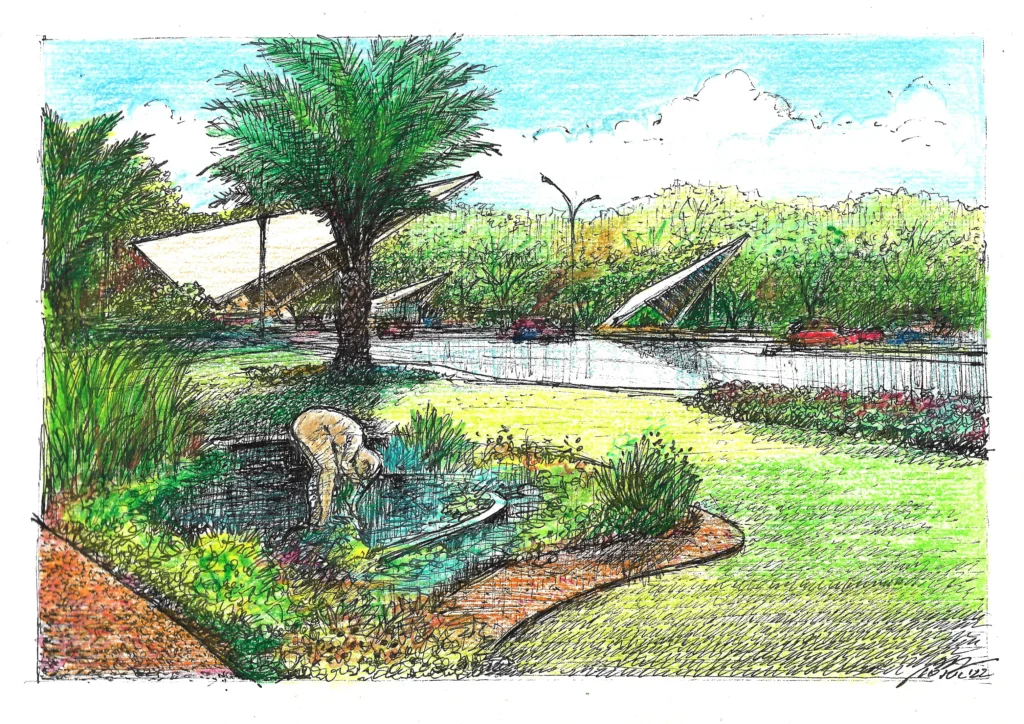
Architect Paulo G. Alcazaren explains it simply: “Essentially, it’s design communication.” He goes on to say, “Kung nasa ibang kurso kayo, you communicate through words or diagrams, [like in] Science or Math. With architecture and design, you communicate through drawings and text.”
Alcazaren graduated with a double degree in Bachelor in Landscape Architecture and Bachelor of Science in Architecture in 1979 and 1981, respectively. He then obtained a master’s degree in Urban Design from the National University of Singapore. Currently, he is a practicing landscape architect and urban planner in his private firm. In the age of tablets and smartphones, he still prefers to first develop his ideas using pen and paper before he passes them on to his employees who will make the digital form.
These days, in addition to managing his firm, he spends his time taking photos around the city and sketching iconic old buildings and structures. He appreciates them for what they are and envisions what they could become. And rants about it.
According to Alcazaren, there is not much difference between drawing in the past and today. Whether it’s with paper or with a tablet, “[drawing] is still [the act of] taking an instrument, whether analog or digital, and translating a three-dimensional reality into two dimensions on a sketch pad or tablet. And it’s important because these design professions, when you ask us to design a house, we create the design on a two-dimensional screen or paper, which is then used to build the actual house.”
He continued to explain that developing the ability to conceptualize design solutions in a two-dimensional form is a crucial skill for architects and related fields to acquire. And he knows this well because, apart from practicing his profession, he also taught at the UP Diliman College of Architecture for a few years.
But he emphasized that it doesn’t end with just drawing. “Your buildings are still experienced by people physically… you still have to go to a physical structure and walk through it. The experience of architecture is not on paper.” For Alcazaren, what you see should be what you actually experience. It’s about being able to depict what is currently present and what you can see eventually. It’s the ability to translate 2D into 3D reality. And that concludes the entire drawing experience.
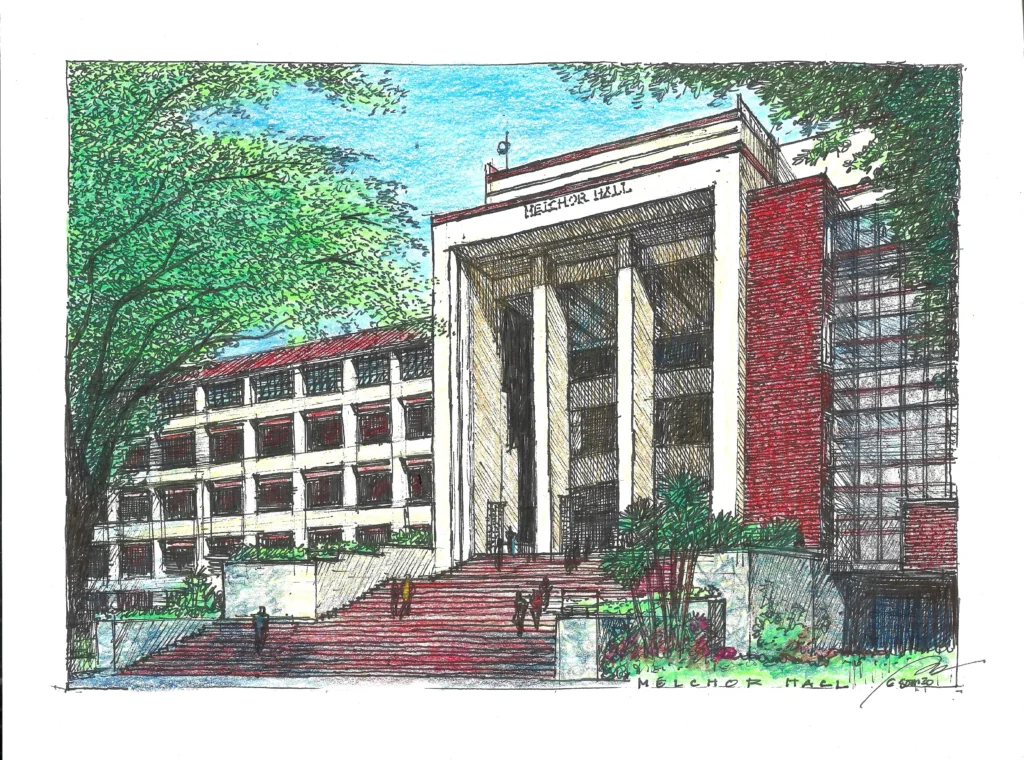
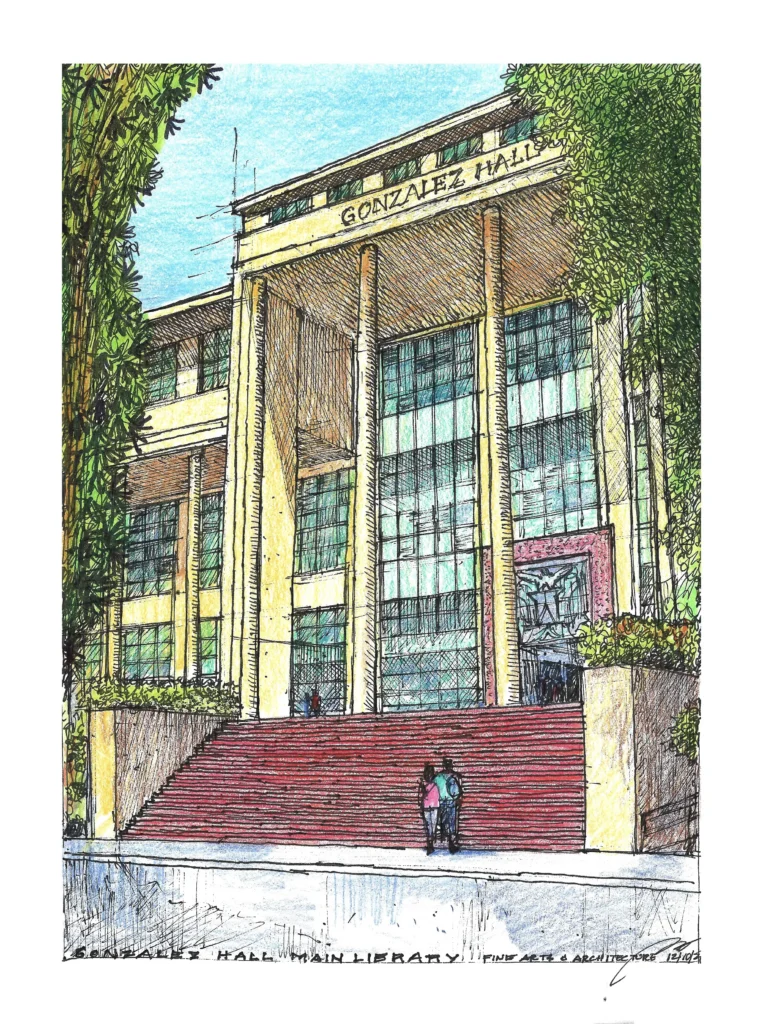
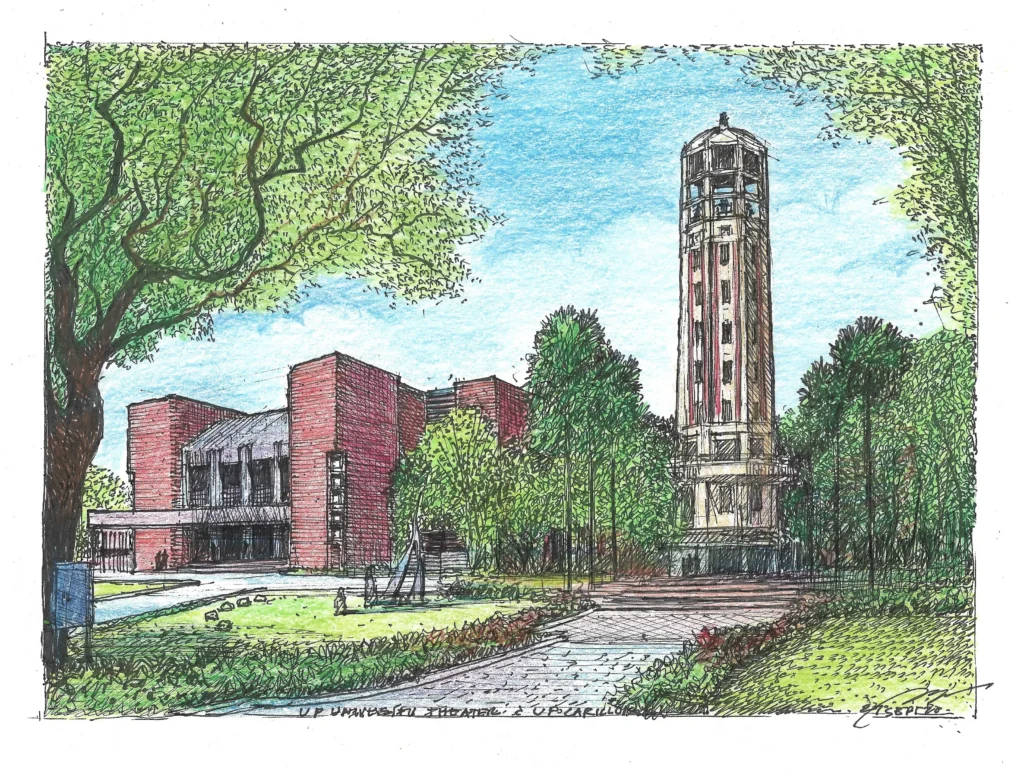
However, the drawing experience is not just for conceptualizing new buildings; it is also partnered with the UP Alumni Association and released the UP Naming Mahal 2023 desk calendars, which featured his 24 hand sketches of iconic UP campus buildings. But why draw the old UP buildings? “I’ve always wanted to do it,” said Alcazaren. “And every chance I have, dino-document ko either through photography, drawing or sketching. Pero most of the sketches were done during COVID… So UP was one of the few [places] na puwedeng puntahan na may social distancing diba? So yan ang libangan ko nung pandemic—to go back to sketching.”
The University is, after all, home to many interesting structures, and “iconic” is probably one of the best words to describe them. The first building that would probably come to mind is Quezon Hall, designed by Architect Juan Felipe Nakpil, the country’s first national artist for architecture. It serves as the seat of the administration for both the UP System and UP Diliman.
Another example would be the twin buildings, Melchor Hall and Palma Hall, both of which were designed by Architect Cesar Concio. While Melchor Hall houses the College of Engineering, Palma Hall is home to the College of Social Sciences and Philosophy, which was formerly known as the College of Arts and Sciences (thus popularly known as “AS”). And lastly, from the big four, there is Gonzales Hall, also known as the UP Main Library, which was designed by Architect Nakpil.
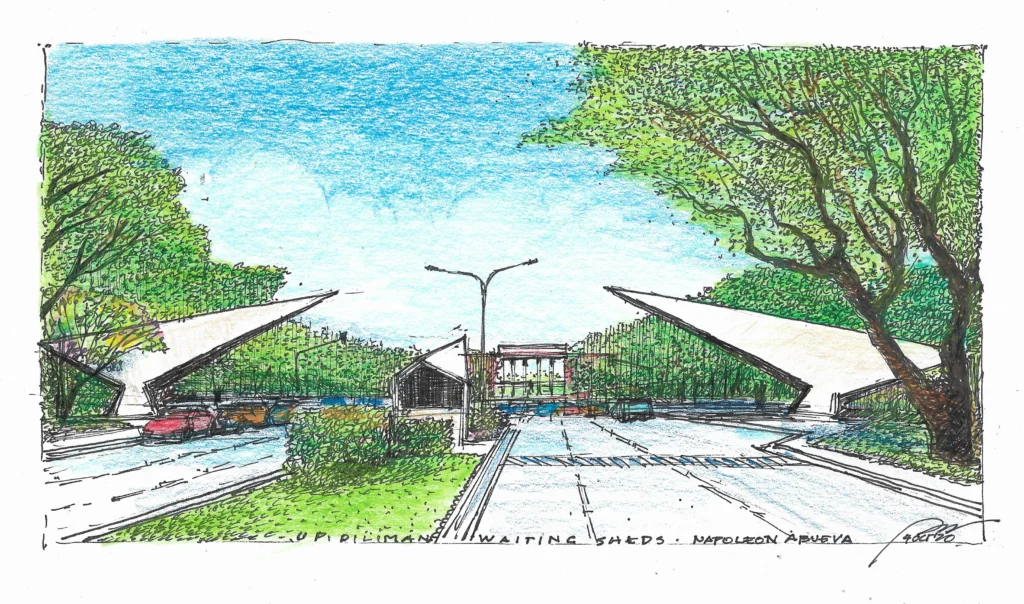
In addition to these academic buildings, Arch. Alcazaren also notes the unique dome shape of the Parish of the Holy Sacrifice along Apacible Street and the Church of the Risen Lord along Laurel Street. These structures are unique, and their design became popular during the 1950s. There are only a few structures shaped this way due to their complicated design. There are also the Carillon and the UP Theater, the Abueva waiting sheds, and more. And through drawing, Alcazaren believes that he is able to highlight the value that these old structures can offer in contrast to the country’s preoccupation with modernity.
In previous interviews, Alcazaren is known to have been working towards slowing down the urban degradation that has been taking place in our country. And apart from his successful involvements, such as the Iloilo Esplanades and the ‘Plazas in the Philippines’ exhibit last May, he also uses social media to document and highlight the importance of preserving our country’s architectural heritage. When he posts his sketches on social media, he makes sure to include a backstory. “It pedagogically teaches people why this building is structured this way and what its purpose was. So, there is educational value in presenting the sketches. And the sketches, because of their nature or form, are appealing to a lot of people because they see a unique way of viewing the building.”
With the rise of newer buildings on campus, Alcazaren could not help but rant about how jarring the University’s new face has become. More than just putting up newer and taller buildings, he believes that there is wisdom to be gleaned from the old buildings that surround us. Nowadays, in the fast-paced urban jungle we live in, he invites us to take a moment, set aside our camera phones, and allow the old buildings to tell their stories. “If you sit down and draw it, for designers, it gives you time to absorb the beauty of the building and the creativity that the designer put into it. And then, like I do, you will also see everything that is wrong with either the building or the context. And usually, it’s the context.”