By Rene Estremera, Xer Jason Ocampo & Angela Sucaldito
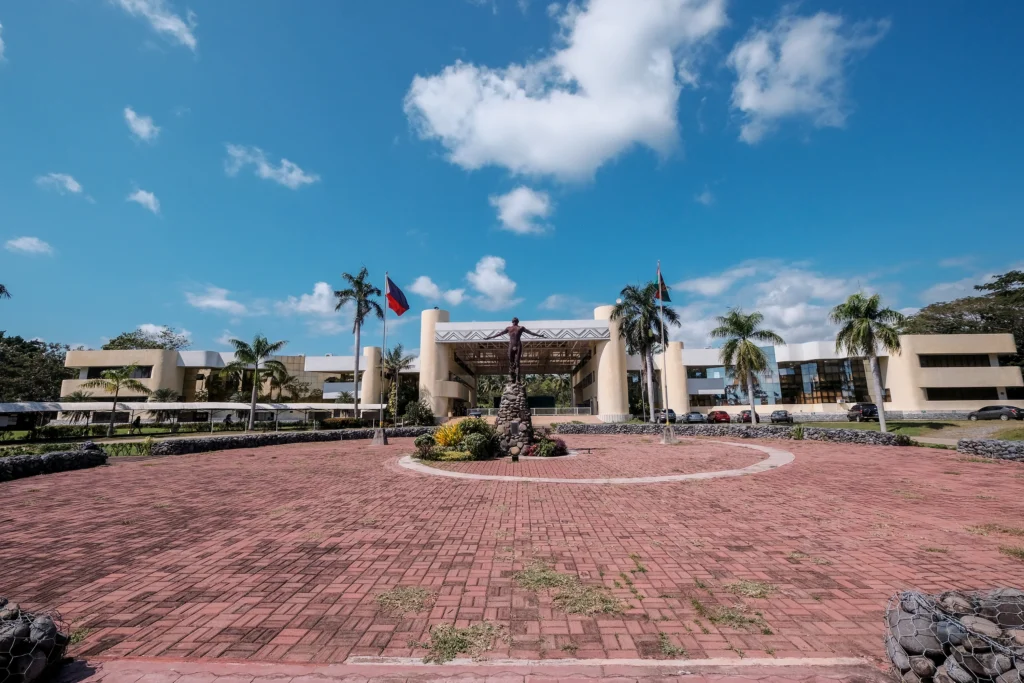
At its inception, it could be said that the pioneers of the University of the Philippines Mindanao (UPMin) community had a hand in building the constituent university, literally. Faculty, students, and staff, as well as members of the pioneer community, brought rocks from their hometowns in Mindanao and placed them at the base of the Oblation Statue.
It was February 20, 1998, UPMin’s third anniversary, when the UP Mindanao Oblation arrived in Davao City by sea, serenaded by the UP Madrigal Singers. Former chancellor Rogelio Cuyno oversaw the placement of the Oblation before the Administration Building, and pioneering constituents placed rocks on its base, where it stands 25 years later. The administration built a road around the palm trees that the alumni planted, and alumnus Sebastian Angliongto proposed the name “Alumni Unity Circle.”
In 2015, constituents and alumni of UPMin gathered to install pavers and gabions in order to improve the Oblation Plaza to its current state. In retrospect, Republic Act 7889 and Presidential Proclamation 822 specified the campus location in Mintal, Davao City. President Fidel V. Ramos signed both documents during the term of UP President Emil Q. Javier.
“Seeing how far the university has progressed,” said former university president Javier in 2021, “I take a lot of pride and satisfaction in being associated with its founding.” Since then, the General Appropriation Acts and the UP System have provided most of UPMin’s funds for infrastructure development.
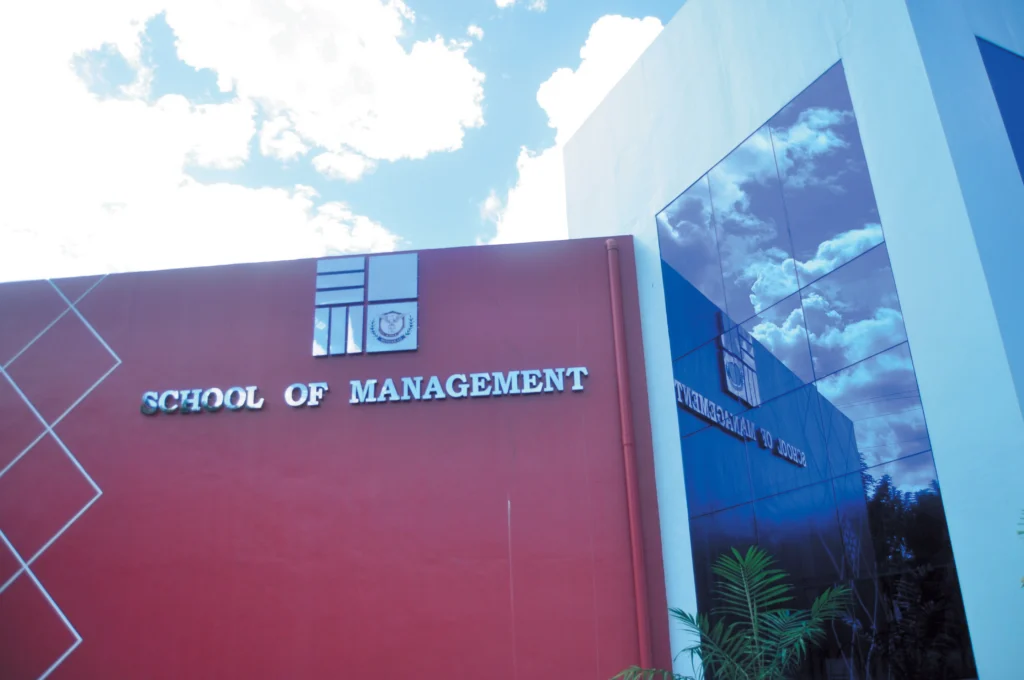
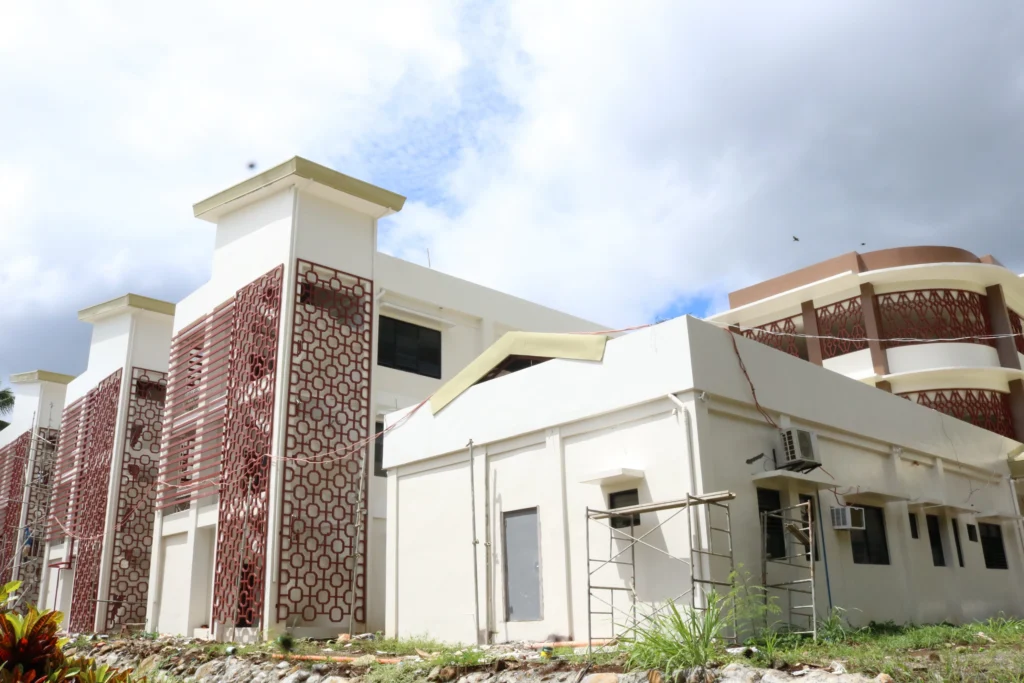
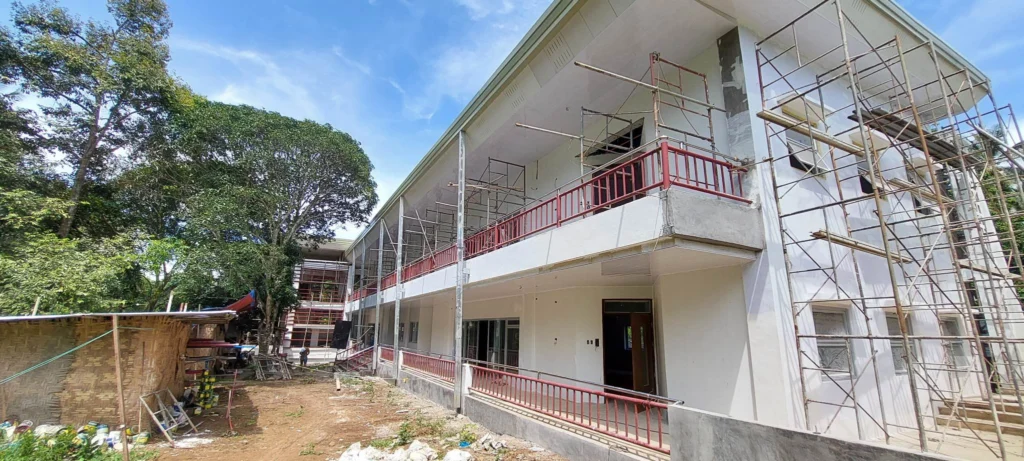
Academic Buildings. For the students’ instruction and pursuit of academic excellence, the School of Management Building Phase 2, an upcoming College of Science and Mathematics (CSM) Academic Building, and CSM Research Development & Extension (RDE) Building are under construction and will be completed soon.
Dormitory and Housing Buildings. UPMin students view Elias B. Lopez (EBL) Hall, the only dormitory at UPMin, as their home away from home. But with the increasing student population, a three- story dormitory was constructed nearby, providing accommodations for 232 students and including a multi- purpose hall. Faculty and staff also have housing needs, and to assist them, the new Faculty and Staff Housing Building provides accommodation for five families and 30 individuals.
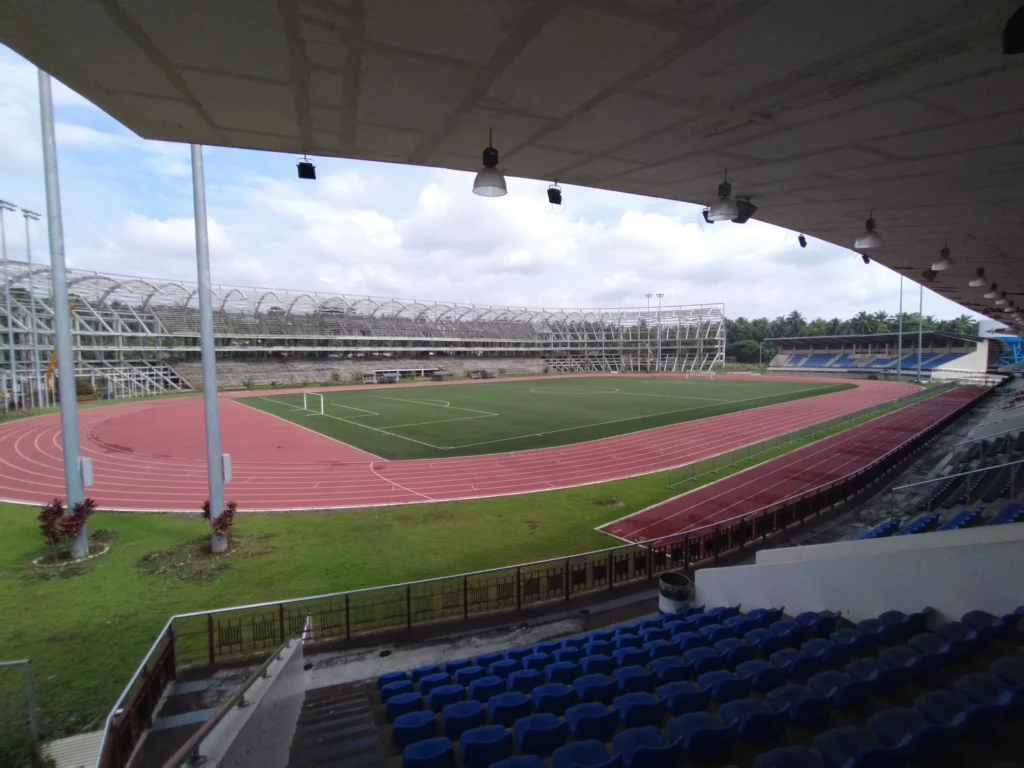
Sports Complex. After making its debut at the 2019 Palarong Pambansa, the Davao City-UP Sports Complex has become the hub of sports activities for UP Mindanao and Davao City. Additional sections of the Football Stadium are under construction, as well as the bleachers, diving boards, and roof for the Aquatics Center. Additionally, a water system is being installed for the complex.
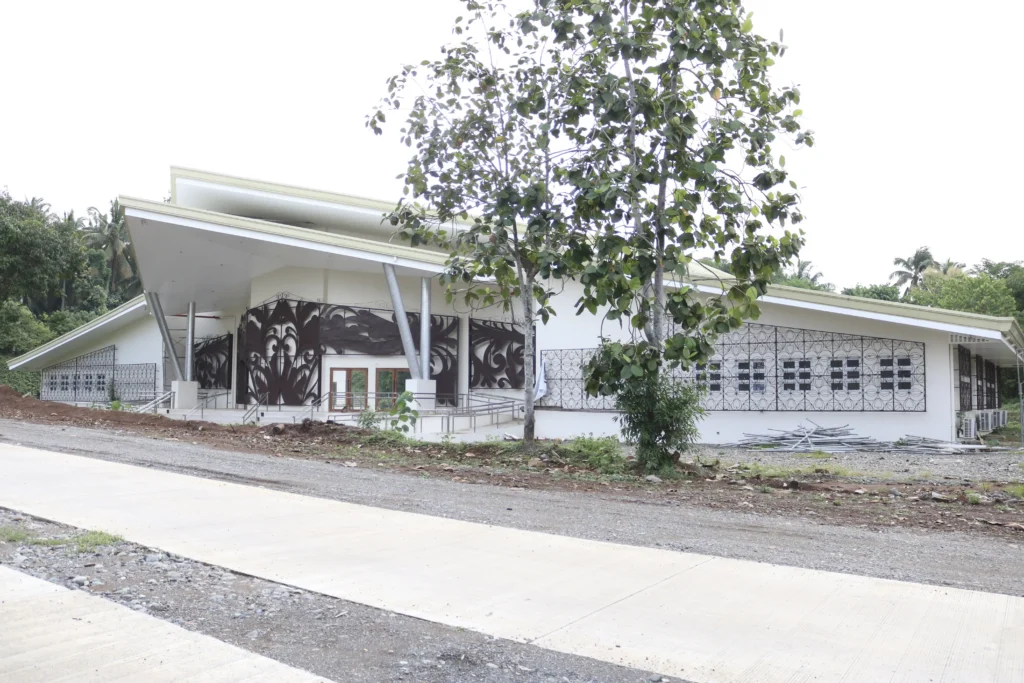
CHSS Cultural Complex. With the vision of becoming the center of culture and the arts, the College of Humanities and Social Sciences (CHSS) has constructed the CHSS Cultural Complex, which includes a state- of-the-art CHSS Performing Arts Theater.
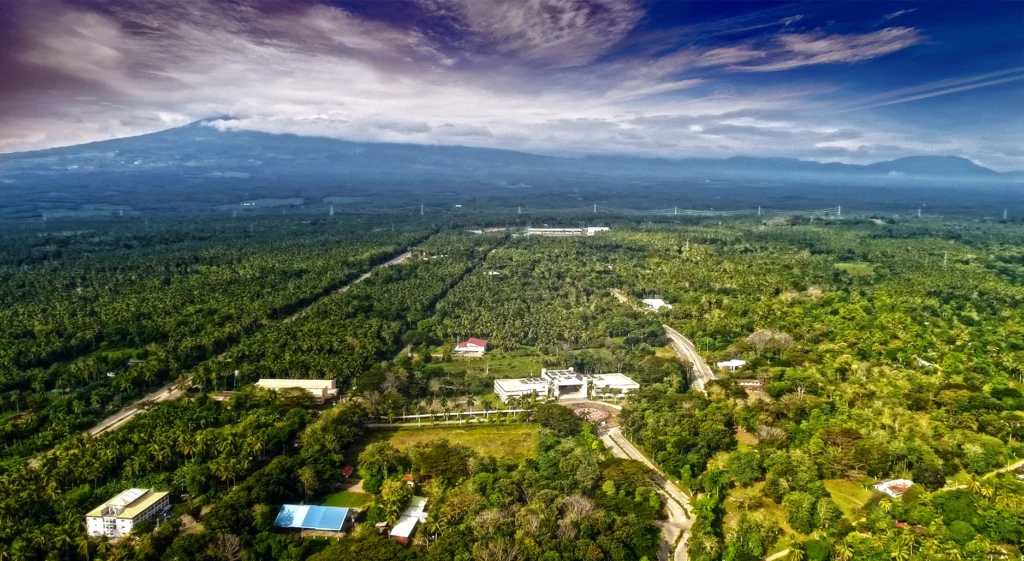
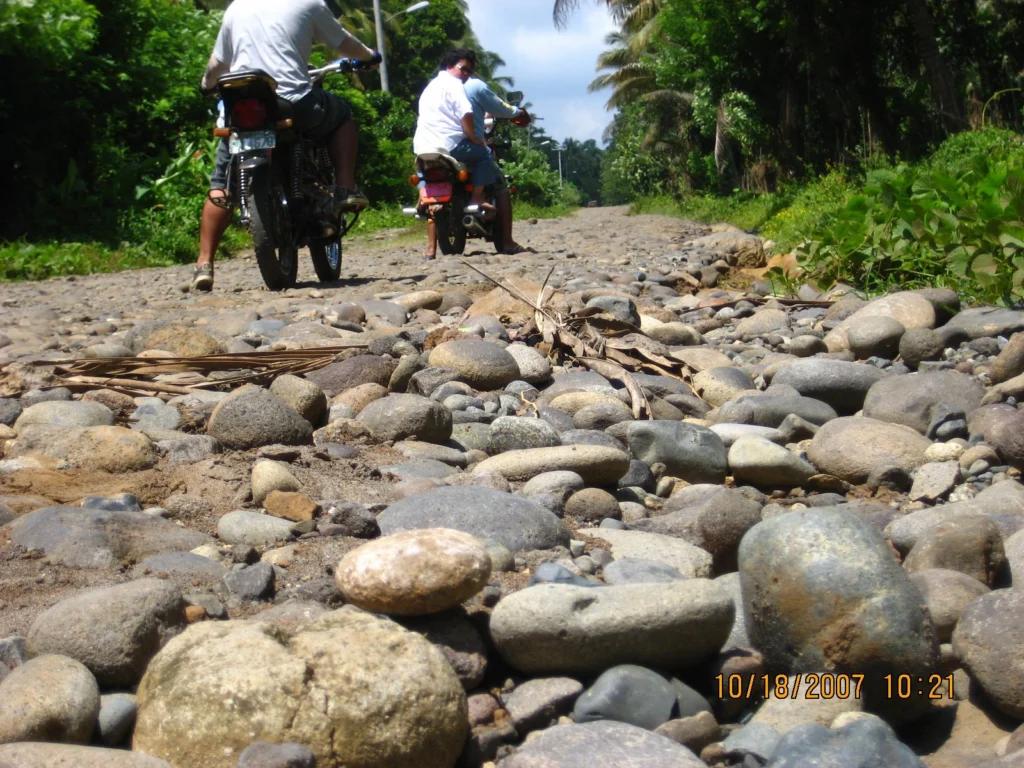
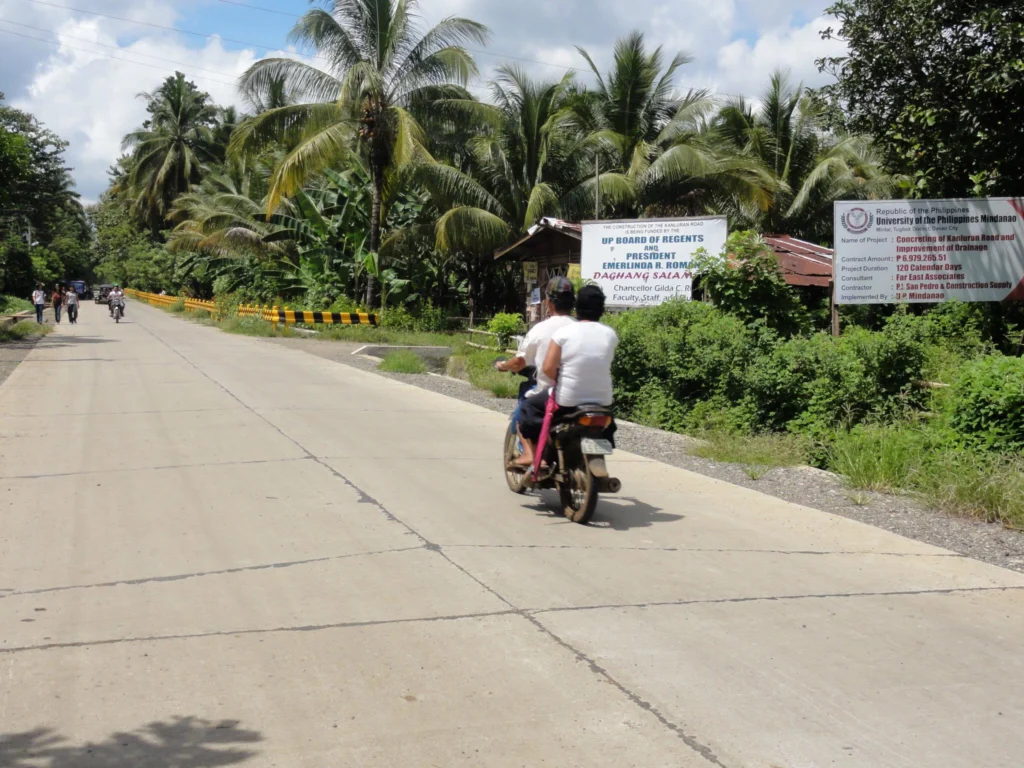
New roads. Gone are the days when students rode habal-habal due to the muddy and rocky roads around UPMin. Students can easily access different buildings thanks to the new road networks. Following the construction of the Davao City-UP Sports Complex in 2019, the corresponding road network was completed. The northern section of the Academic Loop Boulevard has been completed. A new two-kilometer boulevard along the campus’ southern perimeter provides access to the Sports Com- plex, the future Davao City Public Hospital, and other medical and research facilities. As a tribute to the Indigenous Peoples, the original set of paved campus roads were named after Mindanao tribes.
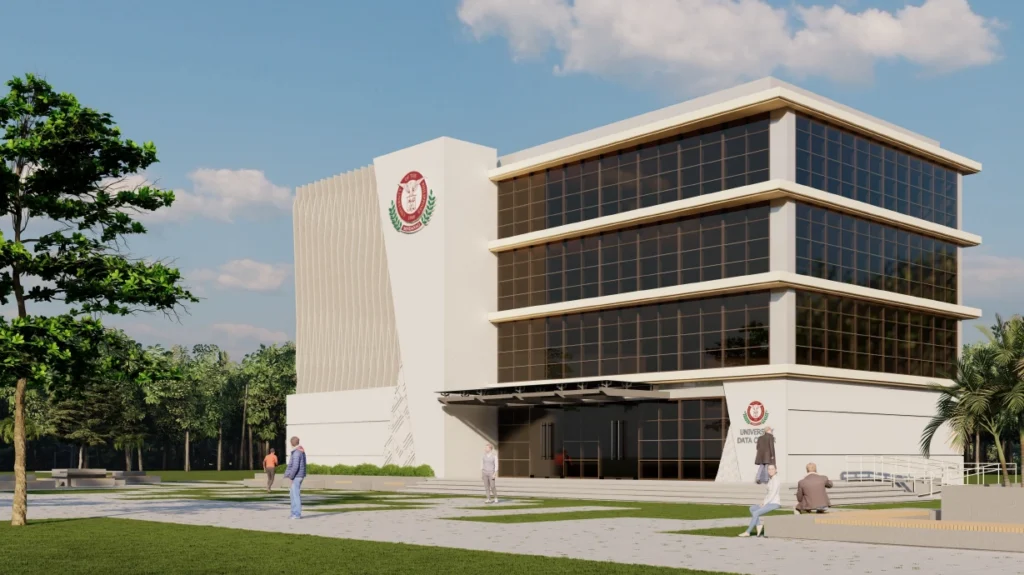
Information Technology. Infrastructure Toward the campus’ digital transformation, UPMin’s Network Upgrade Project and the upcoming IT Complex Data Center will be connected to the University Library and the Interactive Learning Center. This will enhance UPMin’s academic and administrative efforts.
Research Buildings. At the height of the pandemic, the University’s focus shifted towards a call for research. In response, UPMin expanded the Center for the Advancement of Research in Mindanao (CARIM) Building with Phases 2 and 3.
Carillon is published by the
University of the Philippines
Office of Alumni Relations