

EMBRACING THREE DECADES OF EXCELLENCE:
The University of the Philippines Open University
By Anna Cañas-Llamas
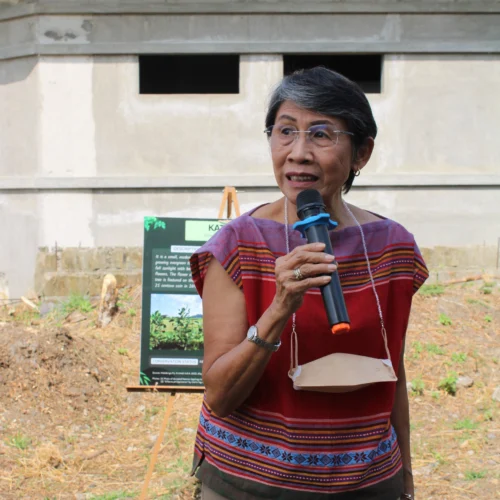
Dr. Cristina Padolina (1995-2001)
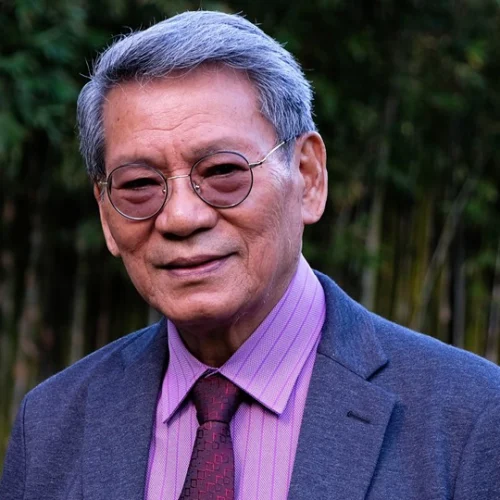
Dr. Felix Librero (2001-2007)
As the University of the Philippines Open University (UPOU) prepares to mark its 30th-year on 23 February 2025, its leadership in open and distance innovative education continues to revolutionize learning accessibility for Filipinos at home and abroad. UPOU has pioneered open and distance education, transcending borders and empowering Filipino learners from diverse backgrounds and locations.
Anyone who is 30 years, old or young, should have had a considerable amount of experiences, learnings, challenges, and victories. A 30-year- old individual born in 1995 would have learned enough to stand ON their own and stand FOR their own. A 30-year-old institution like the UP Open University (UPOU) should and would have been the same—and more.
The Genesis: Dr. Cristina Padolina (1995-2001)
Despite having its roots in 1967’s School-on-the-Air program and pilot implementation through the Science Teaching Using Distance Education (STUDE) in the 1980s, UPOU’s official establishment was on 23 February 1995 during the 1084th meeting of the UP Board of Regents when Dr. Emil Q. Javier sat as the 17th UP President. Dr. Cristina D. Padolina was the founding Chancellor. Still, before then, she led the task force that instituted the first programs offered through DE, the Diploma in Science Teaching (DST) program, with majors in Biology, Chemistry, Physics, and Mathematics. This new autonomous unit was mandated to provide wider access to quality higher education by offering graduate and undergraduate programs and non-degree programs via distance mode. In addition, it aims to develop a continuing education system to sustain the professional growth of the country’s workforce through open learning. The UPOU is mandated to provide educational opportunities beyond the physical boundaries of the conventional school system.
Dr. Padolina laid the foundation for UPOU’s commitment to quality education that is accessible to all. Her leadership was characterized by a dedication to academic excellence and a passion for quality education. During her term, UPOU reorganized from Transforming Autonomous University-Based SDEs to Discipline-Based Faculties and established the Online Teaching and Learning Lab (ONTELL) and Audio and Video for Teaching and Learning Lab (AVTELL).
The Growth: Dr. Felix Librero (2001 to 2007)
Dr. Felix Librero was appointed as the second Chancellor of UPOU and was a driving force behind UPOU’s efforts to harness technology for educational innovation and advancement. Under his leadership, UPOU was reorganized to perform two key strategic functions as a center for distance education in selected areas of specialization where it will develop faculty expertise, offer its academic programs; and continue to develop and maintain a pool of highly trained educational learning technologists who shall provide expertise in the development and delivery of learning packages, whether online or using other educational media and technologies, in collaboration with other CUs wishing to deliver courses in the distance mode. During this term, UPOU was designated as the Center of Excellence for Open Learning and Education by the Commission on Higher Education (CHED) and the e-Learning Competency Center by the Information Technology and e-Commerce Council of the Philippines (now the Commission on Information and Communications Technology).
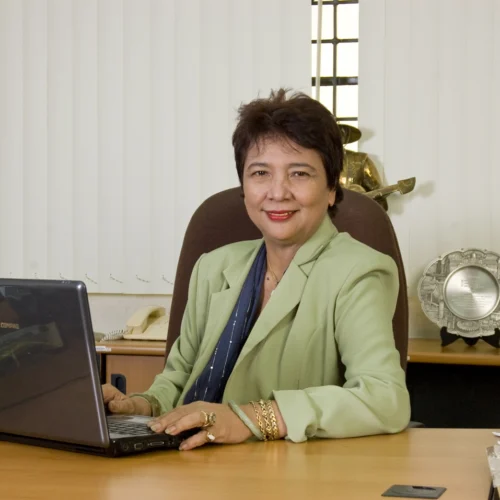
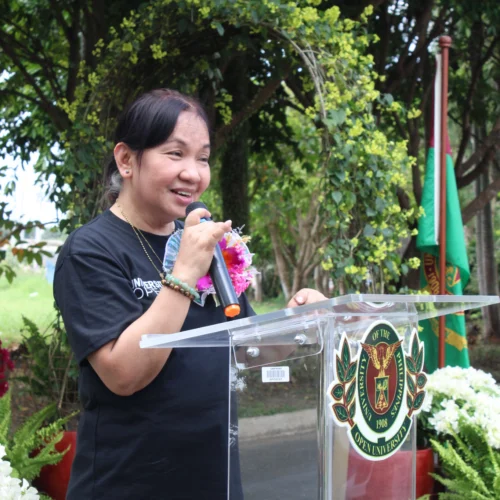
Dr. Grace Javier Alfonso (2007-2016)
Dr. Melinda dela Peña Bandalaria (2016-2025)
The Gear: Dr. Grace Javier Alfonso (2007-2016)
Dr. Grace Javier Alfonso is one of the pioneers of the UPOU as the Dean of SDE-Diliman. She has spearheaded the production of multimedia learning materials as the former Director of the Audio-Visual Learning Laboratory and the UPOU Multimedia Center. As UPOU’s third Chancellor, she has intensified the delivery of online courses through resource-based learning packages, supported UPOU’s offering of the country’s first massive open online courses (MOOCs), and strengthened the university’s information technology and physical infrastructure.
Dr. Alfonso is a staunch advocate of women’s empowerment and open and distance elearning (ODeL). It was during her term when the Open and Distance Learning (ODL) Law (RA 10650) was passed, which mandated UPOU to assist and provide expertise to CHED and TESDA, lead in the development of ODL in the country, and promote the best practices of ODL in the Philippines. Dr. Alfonso’s three terms became the channel for UPOU to obtain leadership in open learning and distance education, not just in the country but also in the region.
The Goal: Dr. Melinda dela Peña Bandalaria (2016-2025)
The fourth and current Chancellor is Dr. Melinda dela Peña Bandalaria, who assumed the Chancellorship in 2016 and will serve until 2025. Her vision for UPOU was “Pamatasang Bukas para sa Magandang Bukas,” built on fulfilling the university’s mandate in RA 10650. Under her term, UPOU served as President of the Asian Association of Open Universities (AAOU), massive open online courses (MOOCs) and Open Educational Resources (OERs) soared, and microcredentials were initiated. UPOU reached Philippine Higher Education Institutions (HEIs), organized the first TriConference, and established the Consortium for Open and Distance Education in the Philippines (CODEPP). This was part of UPOU’s aim to transform universities into universities of the future, producing learners equipped to be future leaders. It was also during the term of Chancellor Bandalaria that the Quality Assurance Office (QAO) and Center for Open and Digital Teaching and Learning (CODTL) were established, and UPOU programs underwent External Quality Assurance (EQA) Assessment.
30th Anniversary Celebration
As UPOU celebrates another milestone for its 30th year in February 2025, it will be holding its Second TriConference, a three-conference-in-one comprised of the 6th International Conference on Open and Distance eLearning, the 2nd International Symposium for AI in Education Convergence, and the 3rd International Symposium on ASEAN Studies. These conferences were fused into one big event to allow participants from each conference to benefit from each other, especially in cross-cutting disciplines. UPOU is also looking forward to celebrating its achievements made possible through its constituents and partners. UPOU’s story is one of vision, innovation, and impact. One thing remains constant as it embarks on its next chapter: UPOU’s unwavering dedication to shaping futures through the power of open education.