UP Alumni Website

IKOT - TOKI

By Susan Claire Agbayani

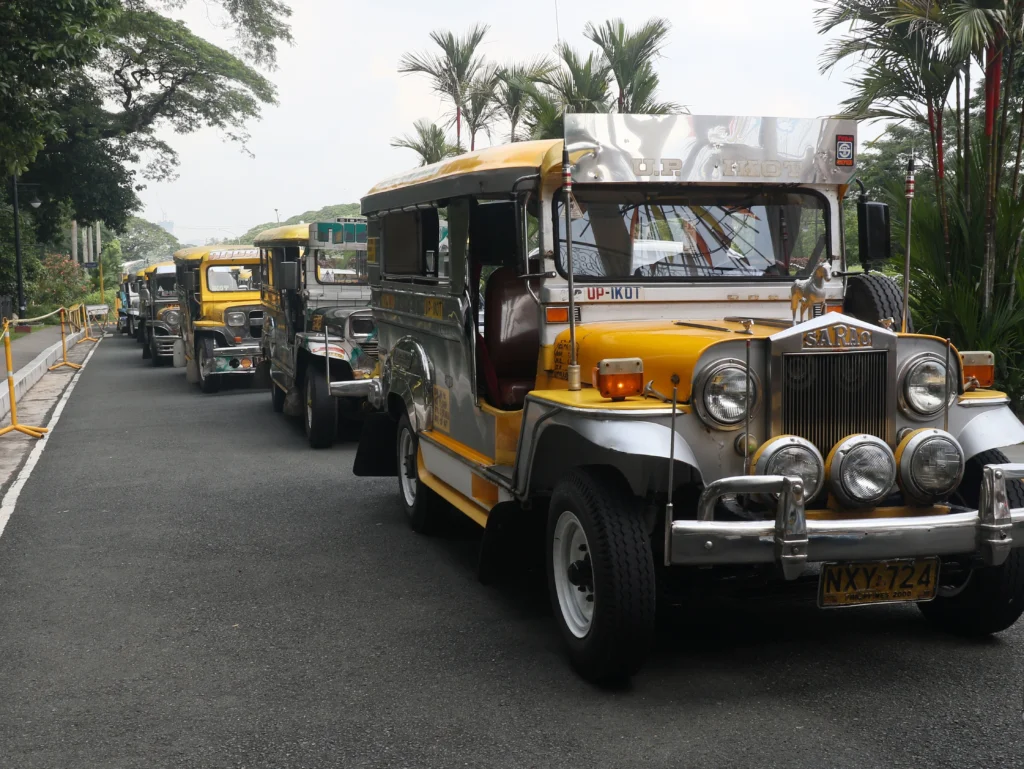
UP Ikot Jeepneys in UP Diliman. Taken on August 01, 2024 by Mr. Kevin Roque, OVPPA-UP MPRO.

Ang UP student ay parang Pantranco jeep – dumadaan sa Pag-Ibig.

Ang love ay parang Ikot: hindi dumadaan sa Masscom.
Ang lahat ay dumadaan sa Music. Dumadaan lang.
Ang love ay parang jeep na dumadaan sa AS. Hindi tumatagal.
Ang love ay parang Toki: matagal dumating
– compiled by Dennis Arroyo

Television producer and director Adrian Arcega (UP Fine Arts-Viscomm, ’96) said that sometime between 1995 and the early 2000s, their literary organization Quill used to have an initiative called “Ikot Poetry.”


“We posted our poems on Ikot jeeps. It was always a hoot secretly watching who would be reading our poems,” Arcega said. Unfortunately, their organization got dissolved because there was a semester when no one bothered to register it.


Don’t we wish that somebody would take it fromthere and continue this noteworthy practice?


Anecdotes about Ikot-Toki rides on campus abound


In mid-2019, Color It Red vocalist Cooky Chua posted a photograph of hers accompanying her only child Waki Ignacio riding the Ikot jeep. He was then applying to be a freshman at the College of Fine Arts. Chua admitted to nearly getting lost on campus, were it not for the help of a fellow passenger.


“First time ko sumakay. Hindi pa (ako) sanay mag-commute. Pagbaba ko ng ikot jeep, I very cheerfully and politely said to the driver, ‘Thank you po. Bye bye.’ I heard the passengers snickering as I left the jeep. Kahiya,” corporate trainer (“and feeling artist”) Gege Cruz Sugue – BS Clothing Tech alumna – said of her first Ikot ride when she was a freshman in 1984.


Mindanao State University-Marawi (MSU-Marawi) Instructor II Diandra Macarambon shares the story of a friend (who shall not be named!) “’Yung friend ko at friend niya, habang nakasakay ng Ikot (spoke) in Kapampangan. Tapos, may nakasakay silang lalaki na may goatee. Sabi nu’ng friend ng friend ko in Kapampangan, ‘Tingnan mo ‘tong lalaki, mukhang kambing sa balbas niya.’ Tawanan sila. May isa pang lalaki na sumakay, binati at kinumusta niya si guy-with-a-goatee. Sabi raw ni guy-with-a-goatee, ‘Ito, mukha na raw akong kambing.’ Hahaha! Hiyang-hiya ‘yung friend ko at kasama niya,” Macarambon shared.


Freelance writer and illustrator May Tobias-Papa (FA, ‘82), describes a cute guy’s experience with her and her sharp things: “Ikot jeep. Freshman ako. ‘Yung only available space ay sa tabi nitong matangkad na cute na guy naka-plaid at may salamin. Siyempre, kilig. Maya-maya – ang likot niya – shift nang shift siya sa kanyang upuan.


Tapos sabay pasipat-sipat ng tingin sa akin. Hinihimas-himas niya ang braso niya. ‘Manyak,’ naisip ko. Buti na lang, Malaki ang tote bag ko. Magpakasawa siyang himas-himasin ang bag ko.”


Tobias-Papa continues. “Bumaba siya sa likod ng Eng. ‘Hmp,’ sabi ko. ‘Cute sana, pero kadiri.’ Inayos ko ang bag ko sa harap ko kasi maluwag na ang dyip at di ko na kailangang ipansanggalang sa manyak. Natusok ako. Pagtingin ko, mga 1/4 inch ng matulis na bagay ang nakalusot sa nylon a tela ng aking bag. Binuksan ko ang bag para suriin kung ano yun – yung compass ko, nabuksan ang hard case! Huhuhu. Natusok pala si cute guy! Hindi niya sinabi sa akin na may tumutusok sa kanya mula sa bag ko. :(”


Not everyone’s experience was pleasant. Comic book writer, manga editor and children’s book author Bambi Eloriaga-Amago said, “Top of mind ay yung nakasabay kong flasher. No pics, wala pang celfone cams nun, hahaha! Pero ang style niya is umupo sa pinaka-dulo sa may estribo tapos kapag may girl na sasakay, bubukaka siya. Ang suot niya ay yung maluwag na sports shorts.” Eloriaga-Amago was a freshman BA Journalism major in 1993.


And a story goes about a girl who almost fell for a guy named “Mike” who would habitually drive around campus seeking out a potential victim by pretending to be lost, and would ask for directions. One time, she followed him while on board an Ikot jeep. “I observed him and noticed that he would only stop if a girl was walking by herself.” This was posted by the Society of Mechanical Engineers on Facebook in February 2023


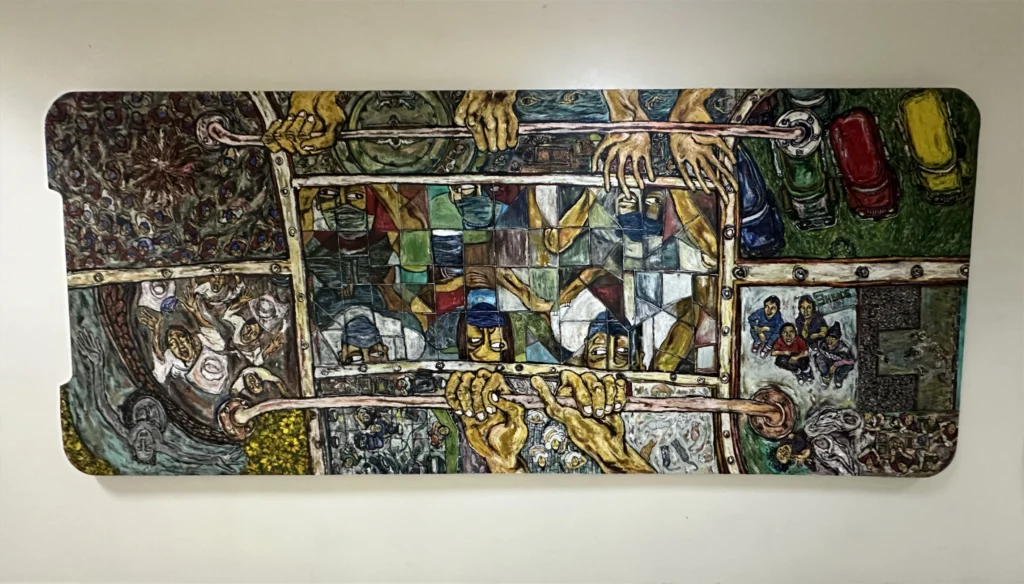
Toki Oil on Jeepney Ceiling Shaped Canvas by Dansoy Coquilla, 2022

Toki lightbulb moment


Training consultant Tess Dean (BSBA ’80) said, “I never knew there was Toki, until my British hubby asked me where Toki was. He saw it on a jeepney. I was wracking my brains, ‘Where is Toki?’ Until it hit me. It was Ikot spelled backwards. ‘Ah, they made it two-way na!!! Hahaha.’ And that’s how I learned where Toki (was).”


UP Ikot Toki exhibit at Parola


And because Ikot (and the counter-clockwise route of Toki) is so much part of the Isko and Iska experience, during the (still) pandemic year of 2022, Daniel “Dansoy” Coquilla had a one-man exhibit of paintings titled “UP Ikot Toki” at the Parola UP Fine Art Gallery. In a sense, he “christened” the gallery by having been the first to exhibit there.


How much was the Ikot/Toki fare when you were a freshman?


We did a survey via social media and were able to trace as far back as 1967 when Dr. Ruby G. Alcantara – UP professor of Filipino language and Philippine literature – paid five centavos (P0.05) for her Ikot fare! By 1970, actress and screenwriter Elizabeth Rose C. Orteza (also known as “Bibeth, AB Imaginative Writing, ’70), paid double at ten centavos (P0.10).


The rate remained constant at twenty-five centavos (P0.25) from the freshman years of bee keeper and entrepreneur Marlene Francia (BS Biology in UPLB, ’76; AB Anthropology in Diliman, ’77) in 1976, till 1980, according to Dean.


It increased to fifty centavos (P0.50) the year Tobias-Papa was an FA freshman in 1982 and to seventy-five centavos (P0.75) during the freshman years of session bass player Junjun Jimenez Perez in 1985, and lawyer and bassist Jing Gaddi (BA English Creative Writing ’93; Bachelor of Laws ’98) in 1993.


But from the time Haya Santiago-Florendo (BS Psych, ’95) – who does project management for Europe, the Middle East and Africa for Abott – and writer, author and independent publisher Beverly Siy (BA Malikhaing Pagsulat, ’96) were freshmen when the Ikot fare was just a peso (P1.00). It has now increased to eleven pesos (P11.00), according to Sophia Bantilan (BSBA and Accountancy, ’20); or up by P3.00 from the pre-pandemic year of 2018, said film programmer Eunice Helera (BA Malikhaing Pagsusulat sa Filipino ’18).

Quo Vadis?

Owing perhaps to the long years of inactivity during the pandemic years (most especially from 2020-2022), lack of predominantly student passengers, and mounting pressures to modernize, the Toki route no longer exists. This happened when the pandemic and lockdown started.


Rolly, a driver who continues to drive the Ikot route said that drivers who had earlier plied the Toki route have shifted to the Ikot route. And sadly, some of those who used to drive Ikot jeeps shifted to driving taxicabs in recent years, or have found work elsewhere, be it in the Philippines or abroad.


And unless the current crop of Ikot jeepney drivers are “consolidated” (Rolly’s term), what fate awaits these drivers?

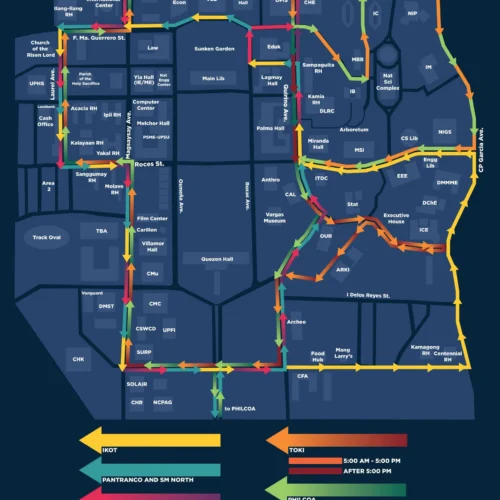
Although this was posted by the Philippine Society of Mechanical Engineers University of the Philippines Student Unit, Inc. on 15 February 2023, the Toki route has ceased to exist since the pan- demic started; or so Ikot jeepney driver Rolly says.
Carillon is published by the University of the Philippines Office of Alumni Relations